
Top Business Leaders | Inspirational Leadership for Success

Featured CoverStory

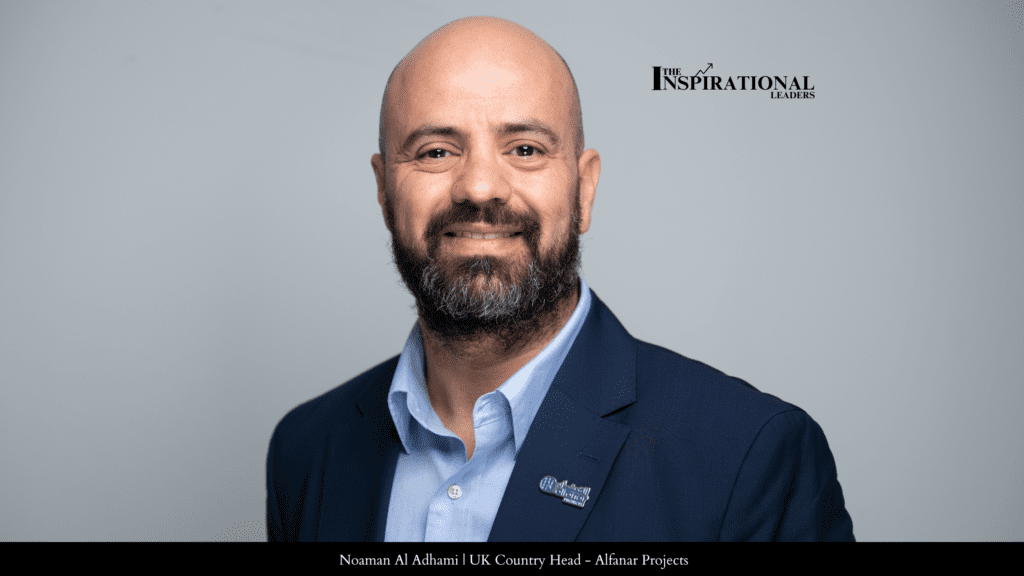
Noaman Al Adhami | UK Country Head - Alfanar Projects

Building the Infrastructure Behind Aviation’s Sustainable Future: How Noaman Al Adhami Is Advancing the Next Era of Air Travel

Digital Version Commercial aviation has long been associated with movement, connectivity, and economic growth. Yet behind every flight route, airport expansion, and global network lies a more complicated reality that the industry can no longer afford to ignore. The future of aviation is now being shaped not only by passenger demand or technological advancement, but by questions of resilience, energy security, environmental responsibility, and the ability of nations to build systems capable of sustaining long term growth. For leaders operating at the intersection of infrastructure and aviation, the challenge is no longer theoretical. It is operational, financial, and deeply strategic. Noaman Al Adhami understands this shift firsthand. As UK Country Head at Alfanar Projects, Noaman is leading one of Europe’s most advanced Sustainable Aviation Fuel developments, Lighthouse Green Fuels (LGF), a flagship project based in Teesside that aims to transform biogenic waste and residues into large scale SAF production. The project is not positioned as a future concept or an experimental pilot. It is being developed as critical industrial infrastructure designed to address some of aviation’s most pressing realities: decarbonisation, fuel security, supply resilience, and long term sustainability. Under his leadership, Lighthouse Green Fuels has progressed through Front End Engineering Design completion and is targeting Final Investment Decision by the end of 2027, with operations expected in 2031. Once operational, the facility is expected to produce around 135,000 tonnes of Sustainable Aviation Fuel annually, equivalent to approximately 180 million litres of SAF each year. The impact extends beyond emissions reduction alone. The project represents a broader shift in how aviation fuel itself is sourced, produced, and integrated into national infrastructure. For Noaman, the significance of this transition goes beyond environmental ambition. Aviation continues to grow globally, and with that growth comes increasing pressure on supply chains, fuel systems, and national energy strategies. The sector’s historic dependence on imported fossil derived jet fuel has exposed vulnerabilities that recent geopolitical and economic disruptions have made impossible to ignore. The United Kingdom alone imports a substantial portion of its jet fuel supply, creating exposure to external market volatility and supply disruptions. In Noaman’s view, projects like Lighthouse Green Fuels are as much about strengthening long term resilience as they are about reducing emissions. That perspective has shaped the way he approaches leadership. Rather than treating sustainability as a standalone initiative, he sees it as part of a much broader industrial transformation involving infrastructure, logistics, energy systems, policy frameworks, and commercial viability. It is a leadership philosophy grounded less in abstract targets and more in execution. “Leadership now is about delivering real, physical infrastructure that addresses both sustainability and fuel security at the same time,” he explains. That mindset has become increasingly important as aviation enters one of the most significant transitional periods in its history. Aviation’s Next Chapter Requires More Than Ambition For decades, aviation operated within a relatively stable framework built around conventional fuel supply chains and predictable infrastructure models. Today, that landscape is changing rapidly. Rising global demand for air travel continues to place pressure on the sector, while environmental expectations from regulators, governments, investors, and consumers are intensifying simultaneously. At the same time, supply chain disruptions, geopolitical instability, and energy market volatility have exposed weaknesses within traditional fuel dependency models. According to Noaman, one of the industry’s biggest mistakes would be treating these issues independently. Decarbonisation cannot be separated from resilience. Sustainability cannot be discussed without considering supply security. And infrastructure investment cannot succeed without long term commercial viability. This is precisely why Sustainable Aviation Fuel is becoming such a critical focus area globally. Unlike future technologies that may require entirely new aircraft systems or decades of infrastructure redesign, SAF offers a pathway that can work within existing aviation frameworks while significantly reducing lifecycle emissions. For long haul aviation particularly, Noaman believes SAF will remain the most practical and scalable solution for the foreseeable future. Yet scaling SAF is not straightforward. Developing large scale facilities requires substantial investment, reliable feedstock supply, advanced technology integration, supportive policy environments, and long term revenue certainty. It also requires patience and coordination across multiple industries. That complexity is what makes projects like Lighthouse Green Fuels particularly significant. Located in Teesside, LGF is designed to convert approximately 1.5 million tonnes of agricultural and forestry residues annually into Sustainable Aviation Fuel. By using waste based feedstocks, the project introduces a fundamentally different production model compared to traditional fossil derived fuel systems. The facility is also designed to integrate with regional carbon capture and storage infrastructure, further increasing its environmental impact and potentially enabling net negative emissions. For Noaman, however, the project’s importance lies not only in emissions reduction figures. It represents proof that large scale industrial decarbonisation can be commercially structured, operationally realistic, and strategically beneficial for national infrastructure. Building Complex Infrastructure Requires Long Term Thinking Much of Noaman’s career has been shaped by building operations and infrastructure projects in challenging and evolving environments. Having worked across major shifts within the energy sector, he sees strong parallels between previous industrial transitions and the current transformation underway in aviation. The difference, he notes, is that aviation operates at the centre of global economic connectivity, making the consequences of delay or failure far more visible. That perspective has influenced the way he approaches project development. At Lighthouse Green Fuels, the emphasis has been on getting the fundamentals right early rather than chasing speed at the expense of long term viability. This includes selecting the appropriate production pathway, securing the right technology licensors, understanding market dynamics, building operational capability, and ensuring there is a practical route toward commercial delivery. The project uses gasification and Fischer Tropsch technology, processes that have historically been used within other industrial applications. Rather than relying on entirely unproven systems, the approach adapts established technologies for low carbon fuel production using sustainable feedstocks. For Noaman, this balance between innovation and operational realism is critical. Infrastructure projects of this scale cannot rely solely on vision. They require disciplined execution, technical credibility, and the ability to
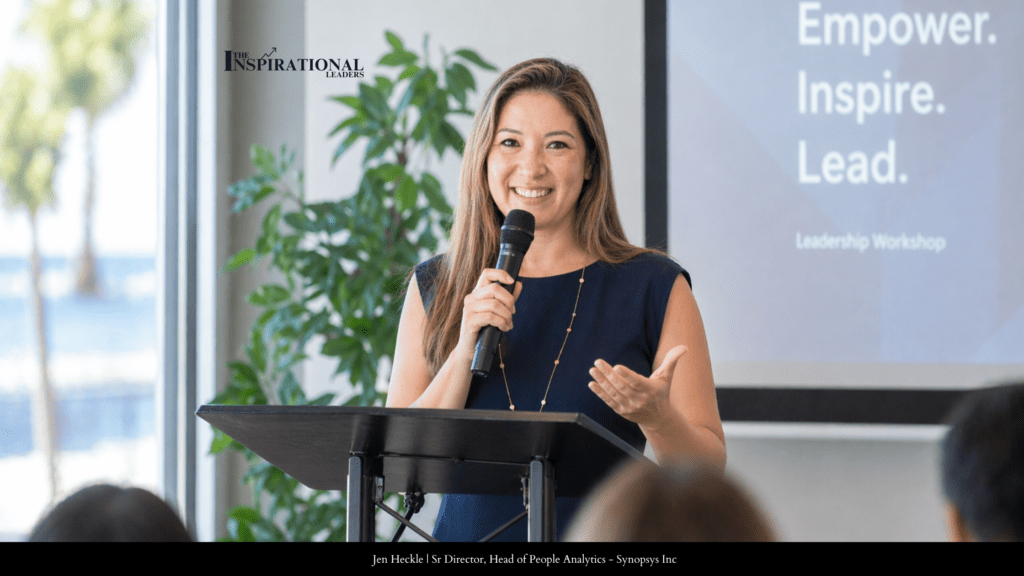
The Human Edge of Data: How Jen Heckle is Redefining Leadership Through People Analytics

Digital Version In today’s enterprise landscape, where organizations are increasingly driven by metrics, dashboards, and predictive models, one fundamental challenge remains – understanding people in a way that is both measurable and meaningful. While data can quantify behavior, it rarely explains it in isolation. Bridging that gap requires a unique blend of analytical precision and human insight – an intersection where Jen Heckle, Senior Director and Head of People Analytics at Synopsys Inc, has built her career. Her work is not just about interpreting workforce data, but about transforming it into a strategic language that organizations can act on. In doing so, she represents a new generation of HR leadership – one that does not separate data from empathy, but integrates both to drive decisions that are not only informed, but impactful. Where Curiosity Became Direction Long before people analytics became a defined discipline, Jen Heckle was already navigating its foundations. Her academic interests were split between psychology and business – two fields that, at the time, seemed parallel rather than intersecting. Without the formal awareness of Industrial/Organizational Psychology as a discipline, she instinctively gravitated toward understanding how human behavior influences workplace outcomes. That curiosity quickly found real-world expression. While still in college, Heckle managed a retail store, balancing academic theory with daily operational responsibility. What made this experience transformative was not just the exposure to leadership, but the ability to test ideas in real time. “I would drive to my shift, after my classes, employ one of the strategies I had read about in class that day, and was able to rapidly put my learnings into action,” she reflects. The immediacy of that application created a powerful feedback loop – one where concepts were not abstract, but tangible, observable, and measurable. It was in these moments that she recognized the practical power of psychology within a business environment. But equally important was the realization that insight alone was not enough. To influence decisions at scale, those insights needed to be translated into something leaders could trust and act upon. “Seeing the power of psychology in a workplace setting is one thing, but selling that idea to a leadership team is another thing,” she explains. “That’s where the numbers come in.” This early understanding would go on to define her career. “Data is the secret weapon of any argument,” she adds – a statement that captures the essence of her approach: using evidence to elevate human-centered strategies from intuition to influence. From Insight to Influence: The Strategic Role of People Analytics As organizations grow more complex, the need to understand workforce dynamics with clarity has become critical. People analytics has emerged as a key function in addressing this need, enabling leaders to move beyond assumptions and toward evidence-based decision-making. For Heckle, however, the value of people analytics lies not just in its ability to provide answers, but in its ability to shape better questions. It is not simply about tracking metrics such as engagement, retention, or performance, but about uncovering the underlying drivers behind them. Her approach reflects a shift from descriptive to diagnostic thinking – moving from “what is happening” to “why it is happening” and ultimately to “what should be done about it.” This progression is what transforms data into strategy. Equally important is the role of people analytics in aligning workforce strategies with broader organizational goals. By translating employee data into actionable insights, Heckle enables leadership teams to make decisions that are not only operationally sound, but strategically aligned with long-term success. The Science of Employee Experience: Listening Beyond the Numbers At the core of Heckle’s philosophy is a deep commitment to understanding the employee experience – not as a static measure, but as a dynamic and evolving journey. While quantitative data provides valuable signals, it is only one part of the equation. “The heart of People Analytics is always employee listening,” she emphasizes. This principle reflects an important distinction: data can highlight patterns, but it is listening that provides meaning. For example, while organizations may have access to metrics indicating attrition rates, those numbers alone cannot explain the reasons behind employee departures. “Yes, we have stats on who’s leaving, from what parts of the organization, and in what numbers,” she explains. “But, to be able to tie it to the ‘why’ required listening to employees.” What emerges from this listening is often more nuanced than expected. Employee disengagement is rarely the result of a single event. Instead, it is typically a gradual process – a slow accumulation of unmet expectations, misaligned priorities, or overlooked frustrations. “Often times, it isn’t a single event, but a slow disengagement that builds over time, and then is sparked by a casual recruiter call,” she notes. This insight shifts the focus from reactive to proactive intervention. Instead of responding only when employees leave, organizations have the opportunity to identify and address issues earlier in the engagement curve. “What if we could intervene farther up on that curve?” she asks – a question that encapsulates the strategic potential of people analytics. To do so effectively, organizations must go beyond surface-level data and invest in understanding the full employee experience – what drives satisfaction, what creates friction, and what influences long-term commitment. Trust, Transparency, and the Ethics of Data Collecting meaningful employee insights, however, depends on one critical factor – trust. Without it, the quality and authenticity of data are compromised, limiting its value. Heckle is clear about the responsibility that comes with handling workforce data. “In order to get employees to tell us these things, they need to absolutely trust that we handle their sentiment data with care – and are transparent about how we use their data and for what purpose.” This emphasis on transparency is not merely a best practice – it is foundational. Employees must feel confident that their voices will not only be heard, but respected. This requires clear communication about how data is collected, how it is used, and how it contributes to decision-making. Trust, in

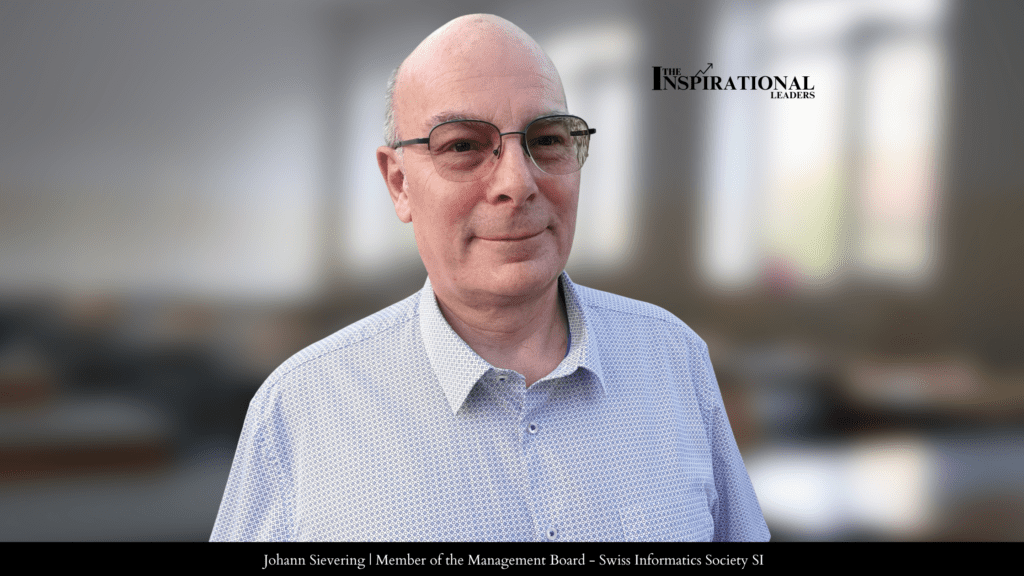
Johann Sievering: Reimagining Education at the Intersection of Intelligence, Responsibility, and Human Potential

Digital Version At a moment when artificial intelligence is not only transforming industries but fundamentally reshaping how knowledge is created, accessed, and applied, education finds itself at a defining inflection point. The challenge is no longer whether it must evolve, but how it can evolve without losing what makes learning deeply human. For Johann Sievering, Member of the Management Board at the Swiss Informatics Society, this question is not theoretical – it is the foundation of a lifelong pursuit. With a career spanning electronics, informatics, artificial intelligence, and decades of hands-on teaching, he has consistently worked at the intersection of technology and education, navigating both its promises and its limitations with equal clarity. Yet what distinguishes Johann is not simply his technical breadth, but his perspective. He approaches education not as a system to be disrupted, but as a living process to be refined and aligned. In his view, learning is inherently human – shaped by curiosity, struggle, discovery, and growth. Technology, no matter how advanced, must serve this process rather than attempt to replace it. This belief continues to define his work. Rather than advocating for rapid, unstructured adoption of innovation, Johann champions a more deliberate path – one where artificial intelligence enhances understanding, supports individual learning journeys, and strengthens the foundations upon which knowledge is built. In an era defined by constant acceleration, his approach offers something increasingly rare: a model of progress that is both forward-looking and deeply grounded in the realities of how humans truly learn. A Personal Journey Rooted in the Nature of Learning For Johann, the foundation of his work begins with a simple yet powerful belief: the human ability to learn is one of the most remarkable aspects of life. Learning, in his view, is not merely the acquisition of knowledge. It is the ability to understand, experiment, progress, think, and ultimately innovate. Yet his own early experiences were not without difficulty. Like many learners, he initially struggled within traditional educational structures before discovering his own way of understanding. This turning point shaped his entire perspective. It led to a realization that continues to guide his work today: learning is not universal in its form. Each individual builds understanding differently, and education must reflect that diversity. Starting his career as a teacher, Johann entered classrooms with curiosity and attentiveness. While he encountered strong pedagogical approaches and high-quality materials, he also identified clear limitations – moments where learners disengaged, where methods failed to connect, and where potential remained untapped. This dual perspective – recognizing both strengths and gaps – sparked a deeper inquiry into how education could evolve. His transition into informatics and artificial intelligence in the 1990s marked a significant expansion of that inquiry. Even at that time, early forms of AI – such as expert systems, semantic networks, and e-learning environments – offered promising opportunities to enhance learning. However, he also recognized their limitations. Technology alone was not sufficient. Without thoughtful integration, it risked misalignment with how humans actually learn. This realization led him to dedicate his work to bridging informatics and education in a way that empowers learners while preserving the integrity of the learning process. Today, with the rise of generative AI and large language models, both the opportunities and the risks have intensified. Artificial Intelligence and the Risk of Delegated Thinking One of the most pressing challenges Sievering identifies is the growing tendency for learners to delegate thinking to artificial intelligence. While AI has immense potential as a learning companion, its use in practice often diverges from its intended role. Instead of acting as a guide or tutor, it is frequently treated as a shortcut. Learners ask for answers instead of guidance. They bypass complexity instead of engaging with it. They produce results without building understanding. This leads to what Sievering describes as a critical risk: the illusion of competence. Today, it is possible for learners to complete assignments, write reports, and even pass examinations without having truly acquired the underlying skills. On the surface, performance appears strong. In reality, the cognitive structures required for long-term success may be missing. The implications are profound. Without genuine skill development, learners may struggle in professional environments that require independent thinking, adaptability, and problem-solving. The gap between perceived ability and actual competence becomes increasingly difficult to bridge. To address this, Sievering proposes a structured and balanced approach to integrating AI into learning. A Two-Phase Model for the Future of Learning At the heart of his philosophy is a clear two-phase model that defines how AI should be used in education. Phase One: Building Cognitive Foundations The first phase focuses on traditional learning processes – effort, trial and error, experimentation, and gradual understanding. During this stage, learners must construct their cognitive frameworks. These mental structures enable reasoning, problem-solving, and the ability to apply knowledge in new contexts. AI, if misused at this stage, can undermine this development. The temptation to seek immediate answers is strong, but doing so bypasses the very process that builds competence. This phase requires discipline – from learners and guidance from educators – to ensure that learning remains active and engaged. Phase Two: Amplifying Learning Through AI Once foundational knowledge is established, AI becomes a powerful accelerator. At this stage, learners are equipped to use AI critically and effectively. They can explore advanced concepts, test ideas, expand their understanding, and push beyond traditional boundaries. AI shifts from being a shortcut to becoming an enhancer of human capability. This phased integration reflects a fundamental principle: technology must be introduced at the right moment, for the right purpose, and in a way that supports – not replaces – learning. Informatics as the Backbone of Modern Education Johann views informatics not merely as a subject, but as a structural component of modern education. Its role is to maintain balance. On one hand, the fundamental principles of learning remain unchanged. The human brain still requires structured development, and foundational knowledge remains essential for informed citizenship. On the other hand, digital technologies offer

The Conversation Advantage: How Sheila Simpson Is Transforming Relationships at Scale

Digital Version In leadership circles, transformation is often framed in terms of scale, innovation, and measurable growth. Yet some of the most enduring forms of impact are far less visible – built not in boardrooms or balance sheets, but in conversations. The kind that challenge assumptions, uncover unspoken expectations, and quietly reshape the foundation of human relationships. For Sheila Simpson, Executive Director of FOCCUS Marriage Ministries, this is where real change begins. Her work does not rely on grand interventions or sweeping frameworks. Instead, it is rooted in something deceptively simple yet profoundly effective: creating space for intentional, honest dialogue. Across more than four decades, the organization she leads has reached millions of couples worldwide – not by telling them what to think, but by helping them learn how to talk to one another in ways that foster clarity, trust, and long-term understanding. At the core of Simpson’s philosophy lies a belief that is both intuitive and deeply consequential: “the quality of our relationships shapes the quality of our lives.” It is a perspective that has guided her journey into relationship education and continues to shape her leadership of a global nonprofit committed to strengthening marriages, families, and ultimately, communities. Where It Began: Recognizing the Gap Between Intention and Preparation Sheila Simpson’s path into relationship education was not driven by a predefined career ambition, but by a pattern she could not ignore. Early in her professional life, she observed that many individuals entered marriage with genuine commitment and optimism, yet struggled when faced with the realities of sustaining a relationship over time. The issue, she realized, was not a lack of desire – but a lack of preparation. “I saw firsthand that many individuals enter marriage with good intentions but without the tools to navigate its complexities,” she explains. “That gap – between intention and preparation – drew me in.” This insight became the foundation of her work. It reframed relationship challenges not as failures of character, but as missed opportunities for guidance and conversation. Couples were not unwilling – they were unequipped. And without the space to explore expectations, communication styles, and values early on, misunderstandings often surfaced later, when they were harder to navigate. What began as observation evolved into purpose. Simpson came to understand that relationships do not exist in isolation; they shape and are shaped by the broader systems around them. “When relationships are strong, families are stronger. When families are strong, communities flourish.” This belief transformed her work into something larger than individual impact. It became a mission centered on strengthening the foundational units of society – one relationship at a time. Redefining Relationship Education: From Information to Dialogue For over 40 years, FOCCUS Marriage Ministries has approached relationship education with a philosophy that stands apart from traditional models. While many programs emphasize content delivery, FOCCUS centers its work on conversation. “Strong marriages don’t happen by accident – they are built through intentional, honest conversations.” This distinction is not merely philosophical – it is operational. Every aspect of the FOCCUS model is designed to move couples from passive learning to active engagement, ensuring that insights are not just understood, but experienced. The process begins with a carefully designed relationship inventory, completed online by each couple. These inventories prompt individuals to reflect on critical aspects of their relationship, including communication patterns, financial expectations, personal values, and life circumstances. The questions are structured to encourage honesty and introspection, surfacing perspectives that might otherwise remain unspoken. What follows is where the model truly differentiates itself. Each couple receives a customized report highlighting both areas of agreement and areas where perspectives differ. Rather than presenting conclusions, the report acts as a catalyst – a starting point for deeper exploration. Facilitators then guide couples through these insights in structured sessions. But their role is intentionally distinct from that of a traditional educator. “They are equipped not to lecture, but to create safe space for conversation – to ask thoughtful questions and help couples engage more deeply with one another.” This approach fundamentally shifts the learning experience. Couples are not being told what to do; they are being guided to understand each other. The conversations that emerge are often nuanced, sometimes challenging, but always rooted in mutual discovery. The result is not simply increased awareness, but the development of communication skills that extend far beyond the program itself – skills that become part of how couples navigate their relationship over time. The Multiplier Effect: Facilitators as Catalysts for Change At the center of this model is a group often overlooked in traditional education frameworks: facilitators. Within FOCCUS Marriage Ministries, they are not secondary to the process – they are essential to it. Drawn from diverse backgrounds, including clergy, counselors, therapists, and experienced couples, facilitators serve as guides, helping create an environment where honest dialogue can unfold. Their role is not to impose structure, but to hold space – ensuring that conversations remain productive, respectful, and meaningful. Through the organization’s Online Facilitator Training for Adult Education – now available in 21 languages – these individuals are equipped with the skills needed to support couples effectively. They learn not only how to interpret the relationship inventories, but how to ask the kinds of questions that prompt deeper reflection. Their impact extends far beyond individual sessions. When a facilitator helps one couple strengthen their communication, the effects ripple outward – to families, to children, and to communities. As more facilitators are trained, this impact multiplies exponentially, creating a network of support that spans cultures and geographies. In this sense, facilitators are not just participants in the process – they are catalysts for systemic change. Values as Foundation: Moving From Assumption to Understanding While communication is the vehicle through which relationships are strengthened, Simpson emphasizes that it is grounded in something deeper: values. “Relationships are not sustained by feelings alone – they are grounded in shared values, mutual respect, and a commitment to grow together over time.” Values-based education is central to the FOCCUS

Scroll to Top