
Top Business Leaders | Inspirational Leadership for Success

Featured CoverStory

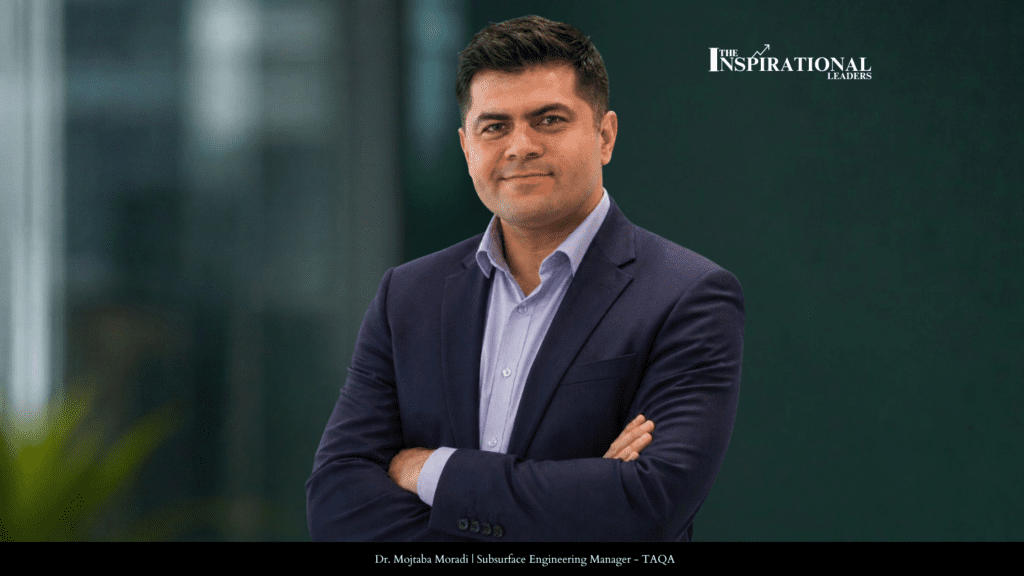
Kenneth Lau: Engineering the Future of Digital Commerce in a Consumer-First World

Digital Version In today’s rapidly evolving consumer landscape, the lines between marketing, commerce, and experience have not just blurred – they have merged into a single, dynamic ecosystem. At the center of this transformation is Kenneth Lau, Global Digital Commerce Marketing Lead at Mondelēz International, whose career reflects both the evolution of the industry and the discipline required to navigate it effectively. With a foundation in FMCG brand management and a portfolio that spans globally recognized brands such as Activia, Aptamil, Ben & Jerry’s, Magnum, and Guinness, Kenneth has built his expertise at the intersection of brand storytelling, consumer understanding, and commercial execution. His journey into digital commerce was not a departure from traditional marketing, but a natural progression – one shaped by changing consumer behaviors and the increasing digitization of how people discover, evaluate, and purchase products. From brand management to digital marketing leadership Kenneth began his career managing brands across food, beverage, and nutrition categories, where he developed a deep understanding of consumer needs, brand positioning, and market dynamics. As digitalization accelerated, marketing itself began to shift. Consumer touchpoints expanded beyond traditional channels, and digital marketing emerged as a critical driver of brand engagement. Recognizing this shift early, Kenneth transitioned into content and digital marketing roles, where he could directly engage with evolving consumer behaviors. Digital commerce soon followed as a logical extension of this journey. This transition coincided with a period of significant acceleration. The COVID-19 pandemic fundamentally reshaped consumer habits, driving a surge in online shopping and creating a boom in digital commerce. At the same time, the ecosystem became more complex – new sub-channels emerged, shopper behaviors diversified, and best practices evolved rapidly. For Kenneth, this environment presented an opportunity to deepen his expertise and play a role in shaping how brands adapt to a more connected and digitally driven consumer landscape. Redefining Digital Commerce as a Full-Funnel Experience A central theme in Kenneth’s approach is the redefinition of digital commerce – not as a transactional endpoint, but as an integral part of the entire consumer journey. “Digital commerce isn’t just a point of sale,” he emphasizes. “It is a marketing and commercial touchpoint that plays a role at every stage of the consumer journey.” This perspective is grounded in observable shifts in consumer behavior. Increasingly, product research begins directly on e-commerce platforms rather than traditional search engines – a behavior often described as ROPO (Research Online, Purchase Offline). Consumers are no longer just browsing; they are actively researching, comparing, and validating their choices within digital commerce environments. As a result, product detail pages have evolved significantly. They are no longer limited to pricing and promotions but now serve as rich storytelling platforms. Brands are investing in more comprehensive content – covering product benefits, nutritional information, brand narratives, and usage occasions – to drive both discovery and consideration. This creates a feedback loop where enhanced content leads to greater visibility and engagement, which in turn drives further discovery and conversion. At the same time, emerging channels such as quick commerce and social commerce are accelerating this transformation. These platforms are shortening consumer journeys by bringing discovery, consideration, and purchase into a single, seamless experience. Balancing Complexity with Strategic Focus In an environment defined by data abundance and increasing complexity, Kenneth advocates for disciplined prioritization. His framework – “Fewer, Better, Bigger” – serves as a guiding principle for navigating digital commerce strategy effectively. The first pillar, Fewer, emphasizes precision in decision-making. Rather than attempting to personalize experiences for every possible audience segment, Kenneth highlights the importance of focusing on the segments that matter most. For example, instead of targeting 30 audience segments, brands should concentrate on the top four that drive approximately 80% of revenue. The second pillar, Better, reflects a commitment to continuous improvement. This involves going beyond surface-level optimizations and addressing meaningful user experience challenges. Instead of implementing multiple minor fixes, the focus should be on identifying and resolving key pain points that significantly impact the consumer experience. The third pillar, Bigger, is about leveraging scale and strategic partnerships to drive impact. Kenneth points to collaborations such as Oreo’s partnership with Coca-Cola, which enabled both brands to execute two campaigns at the cost of one while accessing each other’s user bases to drive new customer acquisition. Together, these principles provide a structured approach to managing complexity while maximizing effectiveness in digital commerce initiatives. Leveraging Data to Drive Meaningful Outcomes Data plays a central role in Kenneth’s strategy, but his approach goes beyond simple measurement. It involves integrating multiple data sources to create a comprehensive view of performance and opportunity. Traditional research metrics, such as market share and home panel data, provide a foundation for understanding overall business performance. Retailer data – including gross merchandise value (GMV) and new user acquisition – offers insights into digital commerce effectiveness. Campaign metrics, such as traffic, conversion rates, and return on ad spend (ROAS), help evaluate marketing performance. In addition to these established metrics, Kenneth is increasingly leveraging advanced tools for predictive analysis. One example is the use of pre-flight analytics tools, such as Vizit’s AI-powered image quality measurement platform, which can assess the effectiveness of creative assets before they are deployed. This shift toward predictive analytics enables teams to make more informed decisions earlier in the process, improving both efficiency and outcomes. Emerging Trends Shaping the Future of Digital Commerce Looking ahead, Kenneth identifies two major trends that are expected to define the next phase of digital commerce growth: social commerce and agentic commerce. Social commerce represents a fundamental shift in how consumers discover products. According to data referenced by Flywheel Digital Retail Insights, ByteDance – the parent company of TikTok – is already among the largest global retailers and is projected to become even more dominant in the coming years. This reflects the growing importance of platforms where “products find people,” rather than consumers actively searching for products. While social commerce is already well established in markets such as China and rapidly growing in Southeast Asia, it

Estela Cachoua | Executive Director - United States-Mexico Chamber of Commerce

Estela Cachoua: Strengthening Cross Border Partnerships and Shaping the Future of Global Trade

Digital Version Global trade today depends not only on economic agreements and supply chain infrastructure but also on the leaders who understand how to connect institutions, markets, and people across borders. Among those leaders is Estela Cachoua, Executive Director of the United States–Mexico Chamber of Commerce, Inter-American Chapter. Through decades of experience in international banking and economic collaboration, she has developed a leadership approach rooted in trust, cultural understanding, and long term strategic thinking. Her career reflects a deep commitment to strengthening relationships between organizations, industries, and nations, particularly between the United States and Mexico. Her professional journey demonstrates how cross border experience can shape a broader vision for economic cooperation. Over the years, she has worked at the intersection of finance, trade, and international partnerships. These experiences have given her unique insight into the complexities of global markets and the importance of building strong professional networks that allow collaboration to thrive even in challenging environments. A Career Built on Global Financial Expertise Estela Cachoua began her professional career in Mexico within the banking sector. From the early stages of her career, she developed an interest in international finance and the relationships that drive economic activity between countries. Her work in banking allowed her to understand the operational and regulatory frameworks that shape financial institutions across different markets. A significant chapter of her career was her time at HSBC Bank, where she spent nearly two decades working with financial institutions across Latin America and the Caribbean. During these years she gained extensive exposure to the dynamics of global finance. The role required constant interaction with international partners, regulatory bodies, and financial leaders who were operating within different economic environments. Working with global institutions across multiple countries brought valuable lessons about how markets operate under varying regulatory frameworks and cultural expectations. Managing relationships with dozens of international financial institutions required careful communication, strategic thinking, and a strong understanding of economic trends that influence global markets. These experiences helped her recognize that international business is not only about financial transactions. It is equally about trust, credibility, and the ability to navigate cultural differences while maintaining professional alignment among diverse stakeholders. One of the defining aspects of her work during this period involved guiding institutional relationships during times of financial uncertainty. Global markets periodically experience volatility, and navigating those conditions requires both technical expertise and confidence in leadership. During moments of market instability, financial institutions depend on clear communication and disciplined decision making. These experiences strengthened her resilience and taught her the importance of maintaining transparency when organizations face uncertainty. The Transition from Banking to Economic Diplomacy After many years in international banking, Estela made a transition that expanded her professional perspective even further. She moved into a leadership role with the United States–Mexico Chamber of Commerce, Inter-American Chapter. The transition represented more than a change in industry. It also marked a shift from focusing primarily on financial institutions to working within an organization dedicated to economic diplomacy and cross border collaboration. The Chamber plays a vital role in bringing together business leaders, policymakers, entrepreneurs, and industry experts who share a common interest in strengthening economic ties between the United States and Mexico. In her role as Executive Director, she works to facilitate dialogue and cooperation among organizations that operate within complex global supply chains and international trade networks. The position allows her to draw upon her extensive background in finance while expanding her influence across multiple industries. Through conferences, trade forums, and collaborative events, she helps create opportunities for leaders to exchange ideas and develop partnerships that support economic growth. Her work reflects a broader vision of international cooperation. By connecting business leaders and institutions from both countries, she contributes to a network that encourages innovation, investment, and long term collaboration. The Power of Professional Networks Throughout her career, Estela has consistently emphasized the importance of building strong professional networks. In global business environments, success often depends on the ability to connect the right individuals and organizations at the right moment. Relationships form the foundation upon which partnerships and opportunities develop. She believes that networking goes far beyond exchanging business cards or attending events. True professional networks are built on trust, credibility, and mutual respect. Over time, these connections become valuable channels for collaboration and problem solving. A principle that she often shares with emerging professionals is that success in international business is influenced not only by who one knows but also by who recognizes and trusts one’s expertise. Reputation and reliability play essential roles in opening doors to new opportunities. Her own career reflects this philosophy. By maintaining strong relationships with financial institutions, corporate leaders, and policy experts across multiple countries, she has created a professional ecosystem that supports ongoing collaboration and economic dialogue. Leading Through Cultural Understanding Working between Mexico and the United States has provided Estela with a deep understanding of cultural dynamics in international business. Cross border collaboration requires more than technical expertise. It also requires sensitivity to how people communicate, negotiate, and build trust within different cultural environments. Business relationships often depend on interpersonal understanding as much as strategic planning. By recognizing cultural nuances and respecting diverse perspectives, leaders can create stronger partnerships that endure beyond individual projects or transactions. Her leadership approach begins with listening carefully to stakeholders and identifying their core objectives. Whether she is working with government representatives, corporate executives, or entrepreneurs, she focuses on understanding the priorities that drive their decisions. Once those priorities are clear, she works to develop strategies that align interests and encourage cooperation. This ability to bridge perspectives has helped her build long lasting relationships across industries and institutions. When individuals feel respected and understood, collaboration becomes more productive and sustainable. Leadership in a Complex Global Trade Environment Global supply chains and trade networks are evolving rapidly. Technological advancement, geopolitical developments, and economic shifts have created an environment where leaders must constantly adapt to new realities. In this context, Estela believes that modern leaders must cultivate several key capabilities. Strategic

Ronald Castro | Vice President, IBM Supply Chain - IBM

Purpose Beyond Borders The Global Leadership Journey of Ronald Castro Vice President of Supply Chain at IBM

Digital Version From San José, Costa Rica, to executive leadership within one of the world’s most respected technology organizations, Castro’s journey is not merely a story of professional advancement. It is a testament to adaptability, humility, and the courage to embrace unexpected opportunities. In an era defined by global interdependence, operational complexity, and constant transformation, few leaders embody resilience and cross cultural stewardship as profoundly as Ronald Castro, Vice President of Supply Chain at IBM. Recognized in The Most Influential Latino Business Leaders 2026, Castro represents more than executive excellence. He represents the power of conviction, cultural identity, and long term vision in shaping global enterprise. From Costa Rica to the World Stage Born and raised in San José, Costa Rica, Castro’s early ambitions were grounded and practical. With determination and clarity of purpose, he left his home country to pursue engineering at Purdue University. His objective was simple yet meaningful: complete his undergraduate and graduate studies, return home, and eventually lead a manufacturing plant. However, life often reshapes even the most carefully crafted plans. During his time at Purdue, an encounter with an IBM recruiter introduced him to a scale of opportunity he had never fully imagined. The possibility of working within a truly global organization expanded his perspective beyond national borders. Initially, he viewed the move as temporary. His intention was to gain multinational experience for a few years and then return to Costa Rica better prepared for leadership. Yet once immersed in IBM’s global ecosystem, Castro discovered something transformative. The complexity of the challenges, the depth of collaboration across continents, and the tangible global impact of the work altered his trajectory. What was meant to be a short professional chapter evolved into a lifelong commitment. “He recalls that when he initially joined the organization, he saw it as a brief professional experience rather than a place where he would build his entire career, expecting it to be a stepping stone rather than a permanent path. “However, the continuous opportunities to learn, strengthen my expertise, and contribute to work that makes a meaningful difference across global markets affirmed that this was where I was meant to build and advance my career.” Early Lessons in Global Leadership From the outset of his career, Castro found himself collaborating with teams that spanned multiple geographies. These early experiences were not simply operational exercises. They were leadership laboratories. Driving change across borders required far more than technical execution. It demanded alignment across cultures, clarity of communication, and the ability to build trust among diverse stakeholders. Castro quickly realized that leadership effectiveness could not be confined by geography. It had to transcend it. He intentionally sought roles that exposed him to different business functions and operating models. From line management to corporate strategy, from functional assignments to enterprise wide transformation initiatives, each step broadened his understanding of the end to end supply chain landscape. Over time, this intentional openness became a defining strength. Castro lived and worked across multiple regions of the United States, from the West Coast to the East Coast and the South. Internationally, his professional journey took him to France, Brazil, Australia, and China. Each location offered new lessons in adaptability and cultural awareness. “With every transition, my ability to lead with deeper understanding and cultural awareness continued to grow,” he shares. Experiencing diverse markets and leadership environments firsthand provides a level of understanding and perspective that cannot be fully gained through academic study or theoretical frameworks alone. The Evolution of a Leadership Philosophy Castro’s leadership style has evolved significantly over the course of his career. In his early years, he was intensely focused on technical mastery and operational excellence. He sought to understand every dimension of supply chain operations, building expertise across manufacturing, strategy, and transformation initiatives. This foundation proved invaluable. It strengthened his business acumen and deepened his understanding of organizational dynamics. However, as his responsibilities expanded, so did his perspective on what leadership truly required. Today, Castro describes his approach as purpose driven and collaborative. While operational rigor remains critical, his focus has shifted toward building strong organizational capabilities and cultivating culture. He believes that sustained success comes not only from delivering results but from empowering people. Over the years, he has realized that true leadership is not about personal achievement, but about creating the conditions where others can grow, perform at their best, and succeed collectively. “It is about developing resilient and high performing teams, aligning everyone around a common purpose, and achieving outcomes that generate sustainable value for the entire organization.” Mentorship and coaching have become central to his philosophy. Castro places significant emphasis on talent development, ensuring that individuals within his organization are equipped to grow, adapt, and thrive in evolving environments. Driving Modernization with Clarity of Purpose The modern supply chain environment is defined by volatility, interconnected ecosystems, and rising expectations from clients and partners. For Castro, transformation is not optional. It is imperative. Under his leadership, IBM’s supply chain organization has pursued modernization guided by a clear North Star: delivering operational excellence, supporting clients, strengthening partnerships, and empowering a highly engaged workforce. A platform based operating model has been adopted to enhance end to end connectivity. By integrating Artificial Intelligence and advanced tools into core processes, the organization has improved decision making, strengthened visibility across operations, and enhanced agility throughout the value chain. Yet Castro emphasizes that structural transformation alone is insufficient. Cultural evolution is equally essential. “He emphasizes that today’s supply chain environment demands strong collaboration across departments and an ongoing commitment to developing new skills to remain effective and competitive. Effective leadership requires the courage to adapt decisively and the clarity to guide others confidently through change. To that end, investment in talent development has been prioritized. Teams are encouraged to expand their capabilities, deepen their expertise, and cultivate a mindset that embraces innovation and accountability. Resilience is also central to strategy, with strengthened risk management capabilities enabling faster response to disruptions. Looking ahead, Castro envisions supply chains defined by predictive insight, transparency, and

Amyne Ismail | Chairman & CEO - UNIMA

Amyne Ismail: Redefining Aquaculture Through Regeneration, Responsibility, and Respect for Nature

Digital Version In a world where aquaculture is often judged by yield, scale, and speed, Amyne Ismail stands apart. His leadership is not driven by the pursuit of volume at any cost, but by a deeper, more demanding ambition—to ensure that food production restores life rather than depletes it. As Chairman and CEO of UNIMA, one of the world’s most respected shrimp producers, Ismail has spent decades quietly proving that aquaculture can be ethical, regenerative, and economically resilient all at once. From the mangrove-lined coasts of Madagascar to the plates of discerning consumers across Europe and beyond, UNIMA’s story is inseparable from Ismail’s own. It is a story shaped by heritage, responsibility, and a profound respect for ecosystems and communities. At a time when global aquaculture faces mounting pressure from climate change, disease, and public scrutiny, Amyne Ismail’s approach offers not just an alternative model—but a compelling blueprint for the future. A Legacy Rooted in Place, People, and Purpose Amyne Ismail’s journey with UNIMA is not simply professional; it is deeply personal. Founded in 1965 by his father, UNIMA began at a time when Madagascar shrimp was largely unknown on the global stage. Long before sustainability became a corporate catchphrase, the Ismail family was building a business in close contact with nature and rural communities, learning firsthand what it means to operate in fragile ecosystems. Growing up between Antananarivo and Madagascar’s coastal mangroves, Ismail was exposed early to contrasts that would shape his worldview. On one side stood the realities of rural life—limited infrastructure, deep reliance on natural resources, and communities whose livelihoods were inseparable from their environment. On the other stood the demands of international markets and global trade. Rather than seeing these as opposing forces, Ismail learned to view them as responsibilities that must be balanced. From the outset of his leadership journey, he was clear on one thing: UNIMA would not grow “at any price.” When the group launched Aqualma in the late 1980s and 1990s, the ambition was radical for its time—to create a distinctly Malagasy ecological model for shrimp farming, one that respected ecosystems, honored people, and safeguarded long-term value. UNIMA became one of the early pioneers in domesticated black tiger shrimp, choosing not to extract broodstock from the wild and thereby reducing pressure on marine biodiversity. Ismail’s progression through the company was deliberate. Starting in legal and strategic roles, he moved into full operational leadership as CEO in 1998 and later assumed the dual role of Chairman and CEO in 2014. Yet, as he often reflects, managing a shrimp company taught him that leadership extends far beyond operational efficiency. His real task, as he sees it, is to protect a coastline, uphold the dignity of a country, and remain accountable to consumers who trust what they put on their plates. A Vision Beyond Sustainability: Toward Regenerative Aquaculture For Amyne Ismail, sustainability is not the destination—it is merely the starting point. His long-term vision for UNIMA is clear and uncompromising: farms and fisheries must restore more life than they extract. This philosophy lies at the heart of what UNIMA defines as regenerative aquaculture. Over nearly four decades, UNIMA has refined a low-density farming model that stands in stark contrast to many intensive systems. While some operations stock close to two hundred shrimp per square meter, UNIMA maintains densities of approximately fifteen to twenty-five. This approach reduces stress on animals, lowers disease risk, and preserves surrounding ecosystems. The environmental impact of this model is measurable and significant. UNIMA helps preserve more than fifty-one thousand hectares of natural areas across Madagascar and has supported extensive reforestation efforts, with approximately 3.5 million trees planted—one million of them mangroves. These mangroves serve not only as biodiversity hotspots but also as powerful natural carbon sinks and coastal protectors. Ismail’s ambition goes far beyond producing premium shrimp. His goal is to demonstrate that a company rooted in the global South can define global standards—whether in taste, animal welfare, climate responsibility, or biodiversity protection. UNIMA’s achievements speak for themselves: Label Rouge certification in France, organic certification for part of its range, ASC certification, and compliance with the highest food safety standards. For Ismail, the future of aquaculture belongs to those who successfully unite science, culture, and ethics. When aquaculture lifts rural families, restores mangroves, and delivers exceptional quality, it moves beyond sustainability into something far more powerful—a regenerative force for both people and planet. Innovation as a Tool for Integrity, Not Excess At UNIMA, innovation is not pursued for novelty or scale alone. Instead, it is treated as a necessity—a survival instinct deployed in service of regenerative principles. Ismail is clear that technology has value only when it strengthens ecosystems, empowers communities, and enhances product quality simultaneously. UNIMA’s operations are fully integrated, spanning domesticated broodstock management, hatcheries, feed mills, farms, processing facilities, and global distribution. This integration ensures high levels of traceability and biosecurity while reducing reliance on external inputs that can compromise sustainability. Antibiotics are avoided, land animal proteins are excluded from feed, and low stocking densities remain non-negotiable. Automation plays a growing role in feeding, aeration, and energy efficiency, ensuring that every kilowatt and every kilogram of feed is used responsibly. Data-driven decision-making guides pond performance, water quality management, animal health, and weather adaptation, all within strict biosecurity frameworks developed in collaboration with the Malagasy state. UNIMA has also been an early adopter of impact measurement. Carbon assessments conducted in 2008 and again in 2020 revealed a roughly thirty-five percent reduction in overall emissions over twelve years. These findings challenged common assumptions—demonstrating that maritime transport represents only a small fraction of total emissions and that meaningful reductions are possible through operational discipline. For Ismail, technology in aquaculture must never compromise identity. Precision, efficiency, and automation are welcomed, but only when they reinforce the company’s ecological values rather than erode them. Moving from Responsible Practices to Regenerative Outcomes Globally, aquaculture sustainability is often framed as risk mitigation. At UNIMA, it is framed as opportunity—an opportunity to leave ecosystems stronger than they were found.

Scroll to Top