
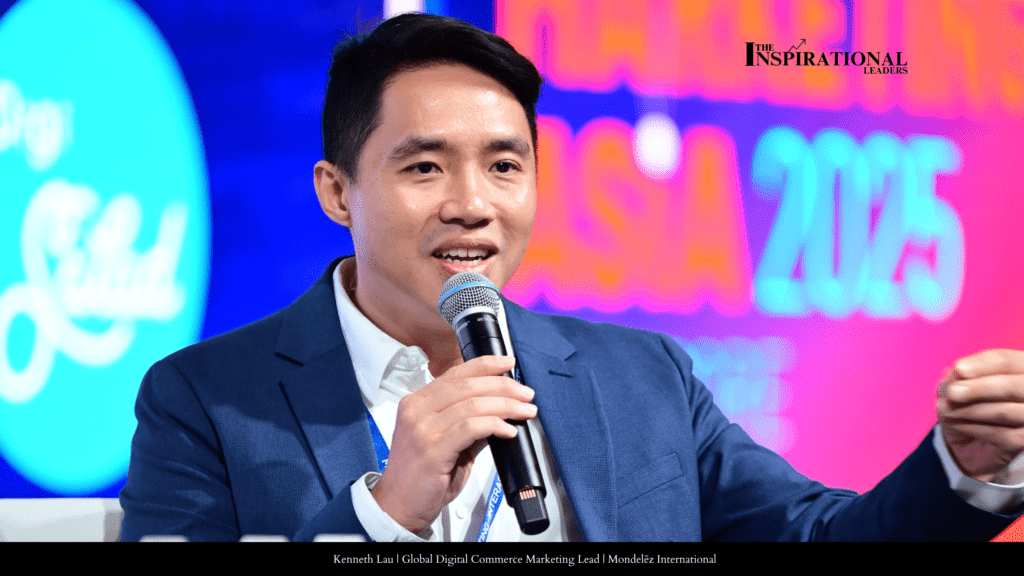
In today’s rapidly evolving consumer landscape, the lines between marketing, commerce, and experience have not just blurred – they have merged into a single, dynamic ecosystem. At the center of this transformation is Kenneth Lau, Global Digital Commerce Marketing Lead at Mondelēz International, whose career reflects both the evolution of the industry and the discipline required to navigate it effectively.
With a foundation in FMCG brand management and a portfolio that spans globally recognized brands such as Activia, Aptamil, Ben & Jerry’s, Magnum, and Guinness, Kenneth has built his expertise at the intersection of brand storytelling, consumer understanding, and commercial execution. His journey into digital commerce was not a departure from traditional marketing, but a natural progression – one shaped by changing consumer behaviors and the increasing digitization of how people discover, evaluate, and purchase products.
From brand management to digital marketing leadership
Kenneth began his career managing brands across food, beverage, and nutrition categories, where he developed a deep understanding of consumer needs, brand positioning, and market dynamics. As digitalization accelerated, marketing itself began to shift. Consumer touchpoints expanded beyond traditional channels, and digital marketing emerged as a critical driver of brand engagement.
Recognizing this shift early, Kenneth transitioned into content and digital marketing roles, where he could directly engage with evolving consumer behaviors. Digital commerce soon followed as a logical extension of this journey.
This transition coincided with a period of significant acceleration. The COVID-19 pandemic fundamentally reshaped consumer habits, driving a surge in online shopping and creating a boom in digital commerce. At the same time, the ecosystem became more complex – new sub-channels emerged, shopper behaviors diversified, and best practices evolved rapidly.
For Kenneth, this environment presented an opportunity to deepen his expertise and play a role in shaping how brands adapt to a more connected and digitally driven consumer landscape.
Redefining Digital Commerce as a Full-Funnel Experience
A central theme in Kenneth’s approach is the redefinition of digital commerce – not as a transactional endpoint, but as an integral part of the entire consumer journey. “Digital commerce isn’t just a point of sale,” he emphasizes. “It is a marketing and commercial touchpoint that plays a role at every stage of the consumer journey.”
This perspective is grounded in observable shifts in consumer behavior. Increasingly, product research begins directly on e-commerce platforms rather than traditional search engines – a behavior often described as ROPO (Research Online, Purchase Offline). Consumers are no longer just browsing; they are actively researching, comparing, and validating their choices within digital commerce environments.
As a result, product detail pages have evolved significantly. They are no longer limited to pricing and promotions but now serve as rich storytelling platforms. Brands are investing in more comprehensive content – covering product benefits, nutritional information, brand narratives, and usage occasions – to drive both discovery and consideration.
This creates a feedback loop where enhanced content leads to greater visibility and engagement, which in turn drives further discovery and conversion. At the same time, emerging channels such as quick commerce and social commerce are accelerating this transformation. These platforms are shortening consumer journeys by bringing discovery, consideration, and purchase into a single, seamless experience.
Balancing Complexity with Strategic Focus
In an environment defined by data abundance and increasing complexity, Kenneth advocates for disciplined prioritization. His framework – “Fewer, Better, Bigger” – serves as a guiding principle for navigating digital commerce strategy effectively.
The first pillar, Fewer, emphasizes precision in decision-making. Rather than attempting to personalize experiences for every possible audience segment, Kenneth highlights the importance of focusing on the segments that matter most. For example, instead of targeting 30 audience segments, brands should concentrate on the top four that drive approximately 80% of revenue.
The second pillar, Better, reflects a commitment to continuous improvement. This involves going beyond surface-level optimizations and addressing meaningful user experience challenges. Instead of implementing multiple minor fixes, the focus should be on identifying and resolving key pain points that significantly impact the consumer experience.
The third pillar, Bigger, is about leveraging scale and strategic partnerships to drive impact. Kenneth points to collaborations such as Oreo’s partnership with Coca-Cola, which enabled both brands to execute two campaigns at the cost of one while accessing each other’s user bases to drive new customer acquisition. Together, these principles provide a structured approach to managing complexity while maximizing effectiveness in digital commerce initiatives.
Leveraging Data to Drive Meaningful Outcomes
Data plays a central role in Kenneth’s strategy, but his approach goes beyond simple measurement. It involves integrating multiple data sources to create a comprehensive view of performance and opportunity. Traditional research metrics, such as market share and home panel data, provide a foundation for understanding overall business performance. Retailer data – including gross merchandise value (GMV) and new user acquisition – offers insights into digital commerce effectiveness. Campaign metrics, such as traffic, conversion rates, and return on ad spend (ROAS), help evaluate marketing performance.
In addition to these established metrics, Kenneth is increasingly leveraging advanced tools for predictive analysis. One example is the use of pre-flight analytics tools, such as Vizit’s AI-powered image quality measurement platform, which can assess the effectiveness of creative assets before they are deployed. This shift toward predictive analytics enables teams to make more informed decisions earlier in the process, improving both efficiency and outcomes.
Emerging Trends Shaping the Future of Digital Commerce
Looking ahead, Kenneth identifies two major trends that are expected to define the next phase of digital commerce growth: social commerce and agentic commerce. Social commerce represents a fundamental shift in how consumers discover products. According to data referenced by Flywheel Digital Retail Insights, ByteDance – the parent company of TikTok – is already among the largest global retailers and is projected to become even more dominant in the coming years. This reflects the growing importance of platforms where “products find people,” rather than consumers actively searching for products.
While social commerce is already well established in markets such as China and rapidly growing in Southeast Asia, it remains relatively nascent in regions like the United States and Europe. However, its trajectory suggests that it will become a key driver of brand discovery and consumer engagement globally. Agentic commerce, on the other hand, represents an even more transformative development. In this model, AI-powered agents are capable of suggesting, explaining, and completing purchases on behalf of consumers within a single conversational interface.
This shift has significant implications for how brands approach content and visibility. Traditional search engine optimization (SEO) will need to evolve into generative engine optimization (GEO), requiring brands to create more extensive and structured content that can be effectively interpreted by AI systems. Ensuring that brand content is both accessible and machine-readable will become critical in this new environment.
Building Loyalty Through Relevance and Value
Despite the increasing role of technology, Kenneth maintains that the fundamentals of brand loyalty remain unchanged. At its core, effective brand building requires two key elements: relevance to consumer needs and the ability to provide genuine value.
Drawing from his experience in the infant formula category, Kenneth provides a practical example. When a baby reaches four months old and parents begin introducing solid foods, they enter a new and often uncertain phase. Brands have an opportunity to support consumers during this transition by providing helpful content, such as recipes and guidance.
Delivering this effectively requires a combination of data, insight, and execution. Brands must identify the right moment through data signals, understand consumer needs at a deeper level, and provide solutions that genuinely improve the consumer experience. Achieving this consistently is challenging, but when done well, it creates strong and lasting connections with consumers – connections that are difficult for competitors to disrupt.
Fostering a Culture of Innovation
Innovation within marketing teams requires more than just access to new tools – it requires a mindset. Kenneth encourages teams to embrace curiosity, actively seek out new developments, and invest time in learning and experimentation. He often references the idea that the greatest risk is not taking any risk, underscoring the importance of staying forward-looking in a rapidly changing environment.
At the same time, he recognizes the practical constraints that organizations face. Time and resources are limited, and not all teams can focus equally on emerging trends. As a result, it is important to define roles clearly, with certain functions dedicating more time to future-facing initiatives while others maintain focus on day-to-day operations. Global and regional teams play a critical role in this structure by leading innovation efforts and driving the adoption of new technologies across the organization.
Anticipating Shifts in Consumer Behavior
Looking toward the next five to ten years, Kenneth expects consumer behavior to become increasingly fragmented, alongside the emergence of larger, more influential trends. In areas such as health and wellness, broad categories are already breaking down into more specific segments, including plant-based diets, high-protein lifestyles, and gluten-free preferences. This trend toward specialization is likely to continue as consumers seek solutions that align more precisely with their individual needs.
At the same time, global connectivity is accelerating the spread of trends across markets. Social media and digital commerce platforms are enabling the rapid adoption of new flavors, textures, and product concepts – from matcha to emerging innovations like Dubai chocolate. This combination of fragmentation and globalization presents both challenges and opportunities for brands, requiring them to balance scale with specificity in their strategies.
Advice for the Next Generation of Marketers
For emerging professionals, Kenneth offers a perspective rooted in both experience and practicality. His primary advice is to remain curious – not only as a marketer, but as a consumer. Engaging with products, exploring digital platforms, and experiencing trends firsthand can provide valuable insights into how the industry is evolving.
At the same time, he emphasizes the importance of continuous learning. Speaking with others in the field, attending industry events, and staying informed through articles and research can help build a deeper understanding of the landscape. This combination of curiosity and learning fosters both passion and perspective – qualities that are essential for those looking to lead in the future of digital commerce.
A Strategic Mindset for a Complex Landscape
Kenneth Lau’s career reflects a consistent ability to navigate complexity with clarity. As a CPG brand and digital marketer, he has demonstrated expertise in managing large-scale brands, driving growth across multiple metrics, and leading teams through periods of significant change. His approach is characterized by a balance of analytical rigor and strategic thinking – an ability to “organize chaos,” craft effective strategies, and communicate them in a way that inspires action. In an industry where change is constant, this ability to bring structure to complexity is a defining strength.
Conclusion: Building the Future of Consumer Engagement
As digital commerce continues to evolve, the role of marketers is becoming increasingly multidimensional. It is no longer enough to focus on individual touchpoints or isolated strategies. Success requires an integrated approach – one that connects data, technology, and consumer insight into a cohesive and effective system.
Kenneth Lau’s work exemplifies this approach. By combining a strong foundation in brand management with a forward-looking perspective on digital commerce, he is helping to shape how brands engage with consumers in a more connected and dynamic environment.
Ultimately, the future of digital commerce will be defined not just by technological advancements, but by how effectively brands use those advancements to create meaningful and valuable experiences for consumers. And in that evolving landscape, leaders like Kenneth are not just adapting to change – they are helping define what comes next.