
In many organisations, performance, culture, and capability development are often treated as separate conversations – each addressed through its own strategy, initiatives, and metrics. Yet in practice, these elements are deeply interconnected. When they are misaligned, even the most well-intentioned efforts struggle to deliver sustained impact.
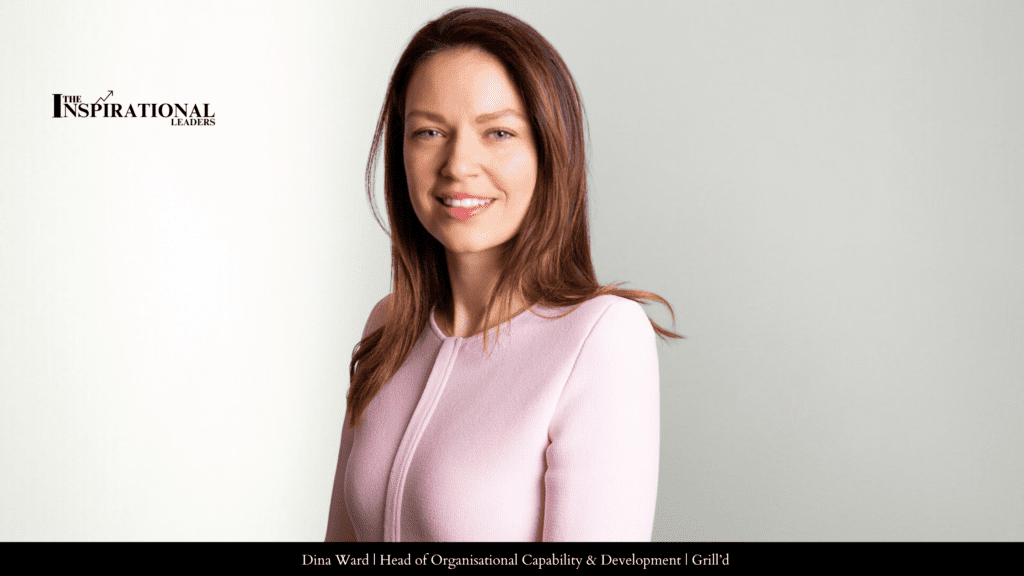
For Dina Ward, Head of Organisational Capability & Development at Grill’d, the focus is not on optimising these elements in isolation, but on designing environments where they reinforce one another. Her work sits at the intersection of human behaviour and organisational performance, where the challenge is not simply to improve outcomes, but to shape how work is experienced at every level of the organisation.
This approach reflects a broader shift in how organisations must operate today. As expectations evolve and complexity increases, the ability to create alignment – between people, systems, and purpose – has become a defining factor in long-term success.
A Career Shaped by Curiosity About Human Behaviour
Ward’s journey into organisational development is rooted in a sustained curiosity about what drives people at work. Early in her career, she was drawn to a fundamental question: why do some environments consistently enable individuals to perform at their best, while others – despite similar resources – fail to do so?
This question led her into the field of Organisational Psychology, where she began to explore the underlying mechanisms that influence behaviour, motivation, and performance. Over time, her focus expanded beyond individual dynamics to encompass entire organisational systems.
What became increasingly clear was that performance is not simply the result of individual capability. It is shaped by the environments in which people operate – by leadership behaviours, structural clarity, and the consistency of expectations.
Her work has since been defined by the ability to influence these environments at scale. Rather than focusing on isolated interventions, she looks at how shifts in mindset, leadership, and systems can collectively transform the way organisations function. This systemic perspective allows for changes that are not only visible in performance metrics, but also in how people experience their work on a daily basis.
The Future of Work as a Present Reality
Much of the discourse around the future of work continues to position it as something organisations must prepare for. Ward challenges this framing, viewing the future of work not as a distant horizon, but as a reality that is already unfolding – albeit unevenly across industries and organisations. This perspective changes the nature of the conversation. Instead of asking how to prepare for change, organisations must assess how effectively they are responding to changes that are already in motion. At the core of this shift is a redefinition of work itself. The traditional emphasis on where work happens has become less relevant than how work is structured and executed. Increasingly, work is characterised by adaptability, fluid roles, and a need for continuous adjustment.
Technology plays a significant role in this transformation, particularly through the rapid advancement of artificial intelligence. As knowledge becomes more accessible and less scarce, the value individuals bring to organisations is no longer defined by what they know, but by how they use that knowledge. The ability to interpret, connect, and apply information in meaningful ways has become a critical differentiator.
This evolution is also influencing employee expectations. There is a growing emphasis on coherence – on work that aligns with broader life priorities and provides a sense of purpose. Employees are less concerned with perfectly designed programs and more focused on whether their work feels meaningful and worth the effort they invest in it. For organisations, this represents a shift from designing processes to designing experiences that integrate performance with purpose.
Understanding What Sustains High Performance
High performance is often discussed in terms of outcomes, but Ward’s work focuses on the underlying conditions that make those outcomes sustainable. In her experience, organisations frequently overcomplicate the concept, introducing layers of frameworks and metrics that can obscure rather than clarify what truly matters.
At its core, sustained performance is built on clarity. Teams that perform consistently have a shared understanding of priorities, expectations, and standards. This clarity reduces ambiguity, allowing individuals to focus their efforts on meaningful work rather than navigating uncertainty.
Beyond clarity, high-performing teams exhibit a set of consistent characteristics. Trust and psychological safety are central among them, enabling individuals to challenge ideas, provide feedback, and learn in real time. In such environments, learning is not treated as a separate activity, but as an integral part of how work is done.
Another defining feature is the distribution of leadership. Rather than being concentrated in a single role, leadership is embedded across the team. It is reflected in how decisions are made, how accountability is maintained, and how standards are upheld.
Equally important is the presence of rhythm and discipline. High-performing teams establish consistent ways of working that create stability, even in dynamic conditions. This structure allows them to move quickly and effectively without becoming reactive. When these elements are aligned, performance becomes a natural outcome of how the team operates, rather than something that must be constantly pursued.
Redefining Leadership Development
The way organisations approach leadership development is undergoing a fundamental shift. Traditional models, which rely on structured programs and predefined competencies, are increasingly being replaced by more dynamic and experiential approaches.
Ward views leadership development not as something that can be delivered through formal training alone, but as something that must be cultivated over time. This cultivation happens through exposure to real challenges – situations that require judgement, adaptability, and the ability to navigate ambiguity.
An important dimension of this shift is the changing source of influence. Leadership expectations are no longer defined solely by organisational frameworks. They are also shaped by the evolving perspectives of the workforce, particularly newer generations who bring different expectations around transparency, inclusion, and authenticity.
This creates a more fluid definition of leadership, one that requires organisations to remain open to change. Rather than imposing fixed models, they must create environments where leadership can evolve organically.
Feedback plays a critical role in this process. Development is no longer driven exclusively by hierarchical relationships, but by a network of inputs from peers, teams, and individuals at all levels of the organisation. This multi-directional feedback provides a more nuanced understanding of impact, enabling more meaningful growth.
Culture as an Outcome of Everyday Behaviour
Culture is often treated as something that can be shaped through targeted initiatives, but Ward’s perspective emphasises a more grounded reality. Culture is experienced through everyday interactions – through decisions, behaviours, and the signals organisations send about what matters. This makes culture both more immediate and more complex. It cannot be engineered solely through programs, because it is continuously reinforced through actions.
A critical factor in shaping culture is the alignment between what organisations say and what they do. Employees are highly attuned to this alignment, and over time, it becomes a key determinant of trust. When actions consistently reflect stated values, trust is strengthened. When they do not, credibility is undermined.
Effective cultures strike a balance between consistency and flexibility. They provide clear expectations while allowing individuals the autonomy to contribute in ways that reflect their strengths. Belonging, within this context, extends beyond inclusion. It is not only about being accepted, but about having a meaningful influence on decisions and outcomes. When individuals feel that their perspectives carry weight, engagement becomes more deeply embedded.
Aligning Individual Growth with Organisational Needs
One of the persistent challenges in organisations is ensuring that individual aspirations align with broader business objectives. Ward emphasises that this alignment must be intentionally designed, rather than assumed. Clear communication of organisational direction is a starting point, but it is not sufficient on its own. Employees need visibility into the capabilities that will be required in the future, as well as pathways to develop those capabilities.
This requires a shift away from traditional career models. Linear progression is increasingly being replaced by more flexible, experience-based growth. Mechanisms such as internal mobility and talent marketplaces enable individuals to build diverse capabilities while contributing to evolving organisational needs. When alignment is effectively designed, it creates a mutually reinforcing dynamic. Individual development supports organisational performance, and organisational clarity supports individual growth.
Using Data as a Tool for Understanding, Not Just Measurement
The increasing availability of data and technology has created new opportunities for organisations, but it has also introduced new challenges. One of the most significant is the tendency to overestimate the value of data while underestimating the capability required to use it effectively. Data provides visibility into what is happening within an organisation, but it does not inherently explain why it is happening. In areas such as people and culture, understanding the underlying drivers of behaviour is essential for making informed decisions.
This places greater importance on interpretation. Organisations must develop the ability to ask the right questions, identify meaningful patterns, and apply context to the insights they generate. As artificial intelligence continues to enhance the speed and scale of data analysis, the role of human judgement becomes even more critical. The value lies not in the data itself, but in how it is understood and applied.
Learning in a Constantly Evolving Environment
The way people learn has changed significantly in response to the pace and nature of modern work. Constant information flow and frequent context switching have altered attention spans and expectations, making traditional learning models less effective. In this environment, learning must be integrated into the flow of work. It needs to be immediate, relevant, and directly connected to the challenges individuals are facing.
This represents a shift from learning as a separate activity to learning as an ongoing process embedded within daily tasks. Individuals develop capabilities not only through structured programs, but through experience, collaboration, and real-time problem-solving. Organisations that succeed in this context are those that enable continuous adaptation – creating systems that support learning, unlearning, and relearning as conditions evolve.
The Expanding Role of HR in a Technology-Driven World
As organisations continue to integrate advanced technologies, the role of HR is expanding beyond its traditional boundaries. It is no longer sufficient for HR to function as a support system; it must play a central role in shaping how work is designed and experienced.
This includes determining how tasks are allocated between humans and technology, as well as identifying the capabilities required for the future. It also involves ensuring that the integration of technology does not come at the expense of human connection and meaning.
In this context, HR becomes both a designer and a steward – responsible for creating systems that enable performance while preserving the human elements that make work engaging and purposeful.
A Grounded Approach to Leadership and Growth
For those entering the field, Ward’s perspective offers a clear and grounded approach. Success is not defined solely by technical expertise, but by the ability to understand oneself, connect with others, and align with organisational priorities.
This alignment creates the foundation for meaningful impact. When individuals have a clear sense of purpose, strong relationships, and an understanding of the business context, they are better positioned to contribute effectively.
It also reinforces the importance of support – both in terms of guidance and belief. The presence of someone who provides direction, as well as someone who believes in an individual’s potential, plays a critical role in development.
A More Intentional Future of Work
As organisations continue to navigate complexity, shifting expectations, and accelerating technological change, the real differentiator will not be speed alone – but intentional design. The ability to create environments where people can perform consistently, adapt continuously, and find meaning in what they do is becoming central to long-term success.
Dina Ward’s work reflects this shift clearly. Rather than focusing on isolated initiatives or short-term interventions, her approach is rooted in alignment – bringing together leadership, systems, and human behaviour into a cohesive whole. It is this alignment that allows organisations to move beyond reactive change and toward sustainable performance.
What emerges is a different way of thinking about work itself. Not as a set of processes to be managed, but as an experience to be designed – one where clarity replaces ambiguity, capability evolves with context, and individuals are enabled to contribute at their full potential. In this context, the future of work is not something that arrives fully formed. It is shaped through deliberate choices – about how organisations lead, how they structure work, and how they value the people within it.
And ultimately, the organisations that succeed will not be defined by how quickly they adapt, but by how intentionally they are built to work – consistently, coherently, and with people at the centre of every decision.