
The transition to electric mobility is often measured through visible milestones. New electric vehicles enter the market every year, charging infrastructure continues to expand, battery technology advances at remarkable speed, and governments around the world establish ambitious targets for reducing emissions. These developments dominate conversations about the future of transportation, yet there is another factor that will ultimately determine how successful this transition becomes.
Behind every electric vehicle, every charging network, and every emerging mobility technology stands a workforce responsible for designing, building, maintaining, repairing, and advancing these systems. Without skilled professionals equipped to navigate an increasingly complex technological landscape, even the most promising innovations cannot reach their full potential.
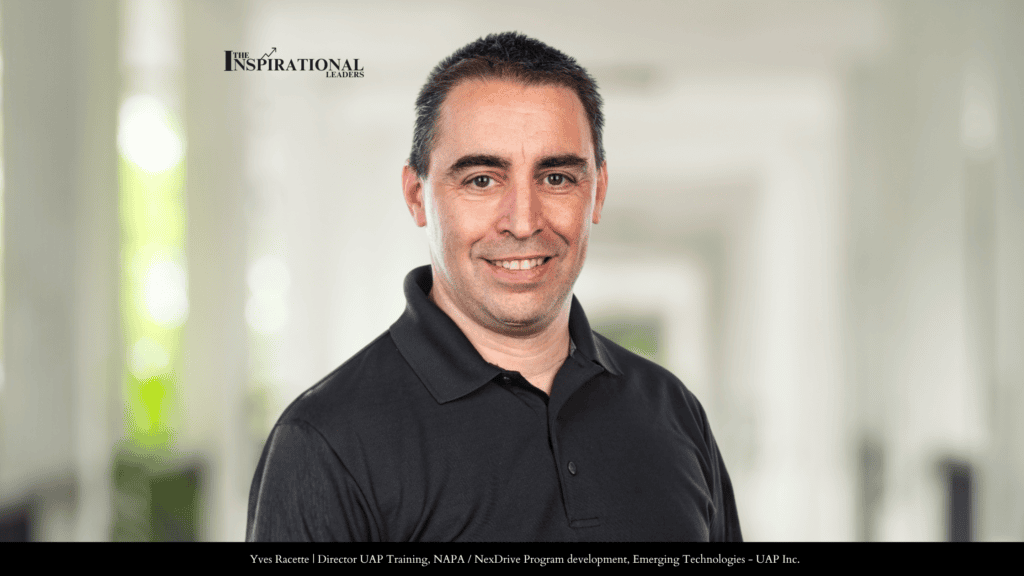
This reality has shaped the career and purpose of Yves Racette, Director UAP Training, NAPA / NexDrive Program Development, Emerging Technologies at UAP Inc. While many industry leaders focus on the technologies driving the mobility revolution, Yves has dedicated himself to preparing the people who will bring that future to life. His work sits at the intersection of education, workforce development, and emerging transportation technologies, helping ensure that the industry’s rapid evolution is matched by equally strong growth in knowledge, skills, and professional readiness.
For Yves, sustainable mobility has never been solely about vehicles or infrastructure. It has always been about people. As transportation enters one of the most transformative periods in its history, he believes the industry’s greatest opportunity lies in empowering individuals with the expertise needed to thrive in a world increasingly shaped by electrification, connectivity, and digital innovation.
Understanding That Technology Alone Is Not Enough
The global shift toward zero-emission transportation is often described as an environmental necessity. As nations work to reduce greenhouse gas emissions and address the challenges associated with climate change, electrification has emerged as one of the most important components of long-term sustainability strategies. While Yves fully recognizes the significance of these environmental goals, his passion for the industry stems from a different realization.
Throughout his career, he came to understand that technological transformation succeeds only when people are prepared to support it. The introduction of electric vehicles creates opportunities not only for cleaner transportation but also for entirely new career pathways, specialized skill sets, and workforce development initiatives that can benefit current and future generations.
This understanding fundamentally shaped his professional direction. Rather than viewing electrification solely as a technological advancement, Yves recognized it as an opportunity to help build a more inclusive and future-ready workforce. The transition toward sustainable mobility requires technicians, educators, engineers, trainers, policy makers, software specialists, and industry leaders who possess a deep understanding of emerging technologies and their practical applications.
For him, advancing sustainable mobility means creating opportunities for individuals to grow alongside the industry itself. It means ensuring that workers are not left behind as technology evolves, but instead are equipped with the tools, knowledge, and confidence required to succeed in an increasingly dynamic environment.
Why EV Education Must Evolve Beyond Traditional Training
One of the most significant challenges facing the mobility industry today is ensuring that education evolves at the same pace as technology. According to Yves, traditional automotive training alone can no longer meet the demands of a transportation ecosystem that is becoming increasingly electrified, connected, and software-driven.
The next generation of EV education must extend well beyond basic high-voltage safety and conventional repair procedures. Modern mobility technologies require a broader and more interdisciplinary approach that incorporates battery chemistry, software-defined vehicles, advanced diagnostics, sensor calibration, connectivity systems, and grid integration concepts.
As vehicles become more intelligent, the skills required to maintain and support them become more sophisticated. Technicians must understand how software influences vehicle performance. They must become comfortable working with advanced electronic systems, machine learning applications, and data-driven diagnostics. Future mobility professionals will need to think beyond mechanical repairs and develop expertise across multiple technological disciplines.
Yves believes educational institutions and training organizations must respond proactively to these changing requirements. The future workforce cannot be prepared using yesterday’s curriculum. Instead, training programs must continuously adapt to emerging technologies while maintaining strong connections to real-world industry needs.
This evolution is already taking shape through innovative learning models that combine traditional instruction with hands-on experience, virtual simulations, augmented reality, mixed reality environments, and hybrid learning solutions. These approaches provide learners with practical exposure to technologies they will encounter throughout their careers while allowing education to remain flexible and accessible.
For Yves, the goal is not simply to teach current technologies but to cultivate a mindset of continuous learning that enables professionals to adapt as the industry continues evolving.
Leadership Built on Empowerment and Adaptability
The foundation of Yves’ leadership philosophy can be traced to experiences that demonstrated the value of collaboration, empathy, and shared growth. Throughout his professional journey, he has witnessed how diverse perspectives often lead to stronger solutions and more meaningful innovation.
These experiences reinforced a belief that leadership is not about directing every decision or maintaining strict control. Instead, effective leadership involves creating environments where people feel empowered to contribute, learn, and grow. It requires removing barriers that prevent individuals from reaching their potential and providing opportunities for continuous development.
This philosophy directly influences how Yves approaches program development and workforce education. Every training initiative represents more than the transfer of technical knowledge. It is an opportunity to inspire confidence, encourage curiosity, and help individuals discover new possibilities within their careers.
Adaptability also plays a central role in his approach. The mobility sector continues changing at an extraordinary pace, making flexibility an essential leadership quality. Rather than resisting change, Yves encourages teams and learners to embrace it as an opportunity for growth.
By fostering cultures that value learning, collaboration, and innovation, organizations can create workforces capable of navigating uncertainty while remaining focused on long-term objectives.
Preparing Talent for an Industry That Never Stands Still
One of the defining characteristics of the EV sector is the speed at which technology evolves. New battery architectures, software capabilities, connectivity solutions, and mobility platforms emerge continuously, creating both opportunities and challenges for industry professionals.
For Yves, ensuring workforce readiness begins with addressing the skills gap through strategic collaboration between educational institutions and industry organizations. Training programs must remain closely aligned with technological advancements while maintaining a strong understanding of market demands.
Industry-academia partnerships play a particularly important role in this process. By creating direct connections between educators and employers, these collaborations help ensure that curricula reflect current industry realities rather than outdated assumptions.
At the same time, accessibility remains essential. Upskilling opportunities must be available to individuals at various stages of their careers, whether they are entering the workforce for the first time or adapting to new technologies after years of experience.
Yves sees tremendous value in combining classroom instruction with immersive learning experiences. Hands-on training, augmented reality tools, mixed reality environments, and hybrid learning solutions provide opportunities for learners to engage with complex technologies in meaningful ways.
More importantly, these approaches help cultivate adaptability—a quality that may ultimately become the most valuable skill of all in a rapidly changing industry.
The Milestone That Confirmed the Future Had Arrived
Every professional journey includes moments that reinforce a deeper sense of purpose. For Yves, one such milestone was the development and expansion of the NAPA/NexDrive certification program and associated EV training initiatives across Canada.
The significance of this achievement extended far beyond the program itself. As demand for specialized EV training continued growing, it became increasingly clear that electric mobility was no longer a niche segment of the automotive market. What had once been viewed as an emerging trend was rapidly becoming a permanent and expanding reality.
The overwhelming interest from technicians, organizations, and industry stakeholders provided clear evidence that workforce readiness would play a defining role in the future of sustainable transportation. Businesses recognized the need to prepare for new technologies. Professionals understood that acquiring specialized knowledge would become increasingly important for career growth. Educational institutions began adapting to meet changing workforce requirements.
For Yves, this moment validated a belief he had held for years: the success of electric mobility depends not only on technological innovation but also on the people responsible for implementing and supporting those innovations.
The growth of the NexDrive program demonstrated that the industry was ready to invest in the skills required for long-term transformation. It reinforced the importance of creating educational pathways capable of supporting future generations of mobility professionals.
Collaboration as the Foundation of Long-Term Progress
While technology often captures public attention, Yves believes sustainable mobility advances most effectively when industry leaders, educators, innovators, and policy makers work together.
No single organization possesses all the knowledge or resources required to address every challenge associated with transportation transformation. Progress depends on collaboration across sectors and disciplines.
Industry leaders bring practical experience and market insights. Educational institutions contribute learning expertise and workforce development capabilities. Innovators introduce new technologies and ideas. Together, these groups help close the growing green skills gap that exists within many sectors of the economy.
This collaborative approach transforms theoretical concepts into practical solutions. It accelerates workforce readiness, supports infrastructure development, and helps communities adapt to changing economic realities.
For Yves, partnerships are not merely beneficial—they are essential. The future of mobility will require unprecedented levels of cooperation among organizations committed to creating sustainable transportation systems and preparing the workforce needed to support them.
The Technologies Reshaping Tomorrow’s Mobility Ecosystem
Although workforce development remains his primary focus, Yves is deeply excited about the technological advancements transforming the mobility landscape.
The convergence of artificial intelligence, advanced battery technologies, and Vehicle-to-Everything connectivity is fundamentally changing how transportation systems operate. Vehicles are increasingly becoming intelligent digital platforms capable of communicating with infrastructure, optimizing performance through software updates, and participating in broader energy ecosystems.
Software-defined vehicles represent one of the most significant developments in this transformation. Through over-the-air updates and advanced computing capabilities, vehicles can continuously evolve long after leaving the production line, creating entirely new possibilities for safety, performance, and user experience.
Advancements in battery technology are equally promising. The continued development of solid-state batteries offers the potential for greater energy density, improved safety, reduced charging times, and enhanced vehicle performance. These improvements address many of the concerns that have historically influenced EV adoption.
Yves is also intrigued by the growing role of autonomous transportation, shared mobility models, and intelligent micromobility solutions. Combined with Vehicle-to-Everything communication networks, these technologies have the potential to create more efficient, accessible, and sustainable transportation ecosystems.
What excites him most is not any single innovation but the way these technologies increasingly work together to create connected mobility experiences that become seamlessly integrated into everyday life.
Creating a Legacy Through People
Being recognized among the Visionary EV Leaders Driving a Sustainable Mobility Future 2026 holds special meaning for Yves, but he is quick to emphasize that such recognition reflects the collective efforts of the people around him.
Throughout his career, he has viewed success as a team accomplishment rather than an individual achievement. The progress made within workforce development, training programs, and sustainable mobility initiatives has been possible because of dedicated professionals who share a commitment to advancing the industry.
Looking ahead, the legacy he hopes to create extends beyond specific programs or achievements. He wants to help build a workforce that is prepared to lead transportation into a more sustainable future. He wants to contribute to an industry where learning remains continuous, opportunities remain accessible, and innovation is supported by skilled professionals capable of turning ideas into reality.
For aspiring leaders entering the mobility sector, his advice reflects the same principles that have guided his own journey. Understand the broader ecosystem. Embrace collaboration. Remain adaptable. Lead with empathy. Seek opportunities to contribute within your communities and align your skills with meaningful challenges.
The future of sustainable mobility will require vision, resilience, and innovation. Yet perhaps most importantly, it will require people who are willing to learn, grow, and help others do the same.
As electric mobility continues reshaping transportation around the world, Yves Racette remains focused on a simple but powerful belief: technology may drive progress, but people make it possible. By helping prepare the workforce behind the mobility revolution, he is contributing to a future where sustainable transportation is not only achievable but built to last.