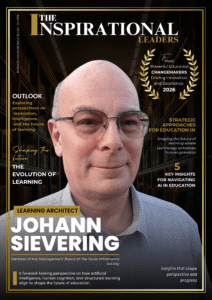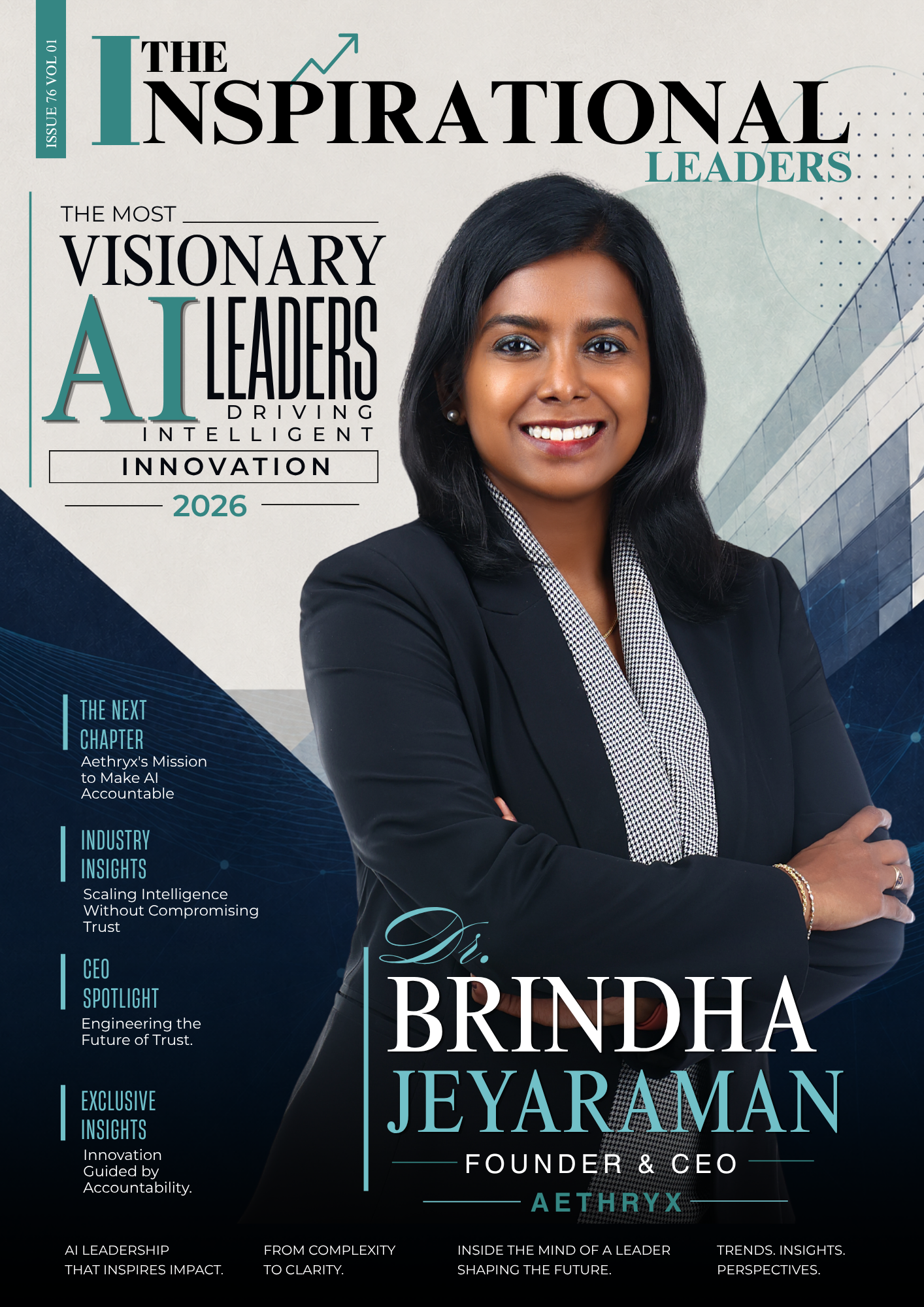

Johann Sievering: Reimagining Education at the Intersection of Intelligence, Responsibility, and Human Potential
Digital Version At a moment when artificial intelligence is not only transforming industries but fundamentally reshaping how knowledge is created, accessed, and applied, education finds itself at a defining inflection point. The challenge is no longer whether it must evolve, but how it can evolve without losing what makes learning deeply human. For Johann Sievering, Member of the Management Board at the Swiss Informatics Society, this question is not theoretical – it is the foundation of a lifelong pursuit. With a career spanning electronics, informatics, artificial intelligence, and decades of hands-on teaching, he has consistently worked at the intersection of technology and education, navigating both its promises and its limitations with equal clarity. Yet what distinguishes Johann is not simply his technical breadth, but his perspective. He approaches education not as a system to be disrupted, but as a living process to be refined and aligned. In his view, learning is inherently human – shaped by curiosity, struggle, discovery, and growth. Technology, no matter how advanced, must serve this process rather than attempt to replace it. This belief continues to define his work. Rather than advocating for rapid, unstructured adoption of innovation, Johann champions a more deliberate path – one where artificial intelligence enhances understanding, supports individual learning journeys, and strengthens the foundations upon which knowledge is built. In an era defined by constant acceleration, his approach offers something increasingly rare: a model of progress that is both forward-looking and deeply grounded in the realities of how humans truly learn. A Personal Journey Rooted in the Nature of Learning For Johann, the foundation of his work begins with a simple yet powerful belief: the human ability to learn is one of the most remarkable aspects of life. Learning, in his view, is not merely the acquisition of knowledge. It is the ability to understand, experiment, progress, think, and ultimately innovate. Yet his own early experiences were not without difficulty. Like many learners, he initially struggled within traditional educational structures before discovering his own way of understanding. This turning point shaped his entire perspective. It led to a realization that continues to guide his work today: learning is not universal in its form. Each individual builds understanding differently, and education must reflect that diversity. Starting his career as a teacher, Johann entered classrooms with curiosity and attentiveness. While he encountered strong pedagogical approaches and high-quality materials, he also identified clear limitations – moments where learners disengaged, where methods failed to connect, and where potential remained untapped. This dual perspective – recognizing both strengths and gaps – sparked a deeper inquiry into how education could evolve. His transition into informatics and artificial intelligence in the 1990s marked a significant expansion of that inquiry. Even at that time, early forms of AI – such as expert systems, semantic networks, and e-learning environments – offered promising opportunities to enhance learning. However, he also recognized their limitations. Technology alone was not sufficient. Without thoughtful integration, it risked misalignment with how humans actually learn. This realization led him to dedicate his work to bridging informatics and education in a way that empowers learners while preserving the integrity of the learning process. Today, with the rise of generative AI and large language models, both the opportunities and the risks have intensified. Artificial Intelligence and the Risk of Delegated Thinking One of the most pressing challenges Sievering identifies is the growing tendency for learners to delegate thinking to artificial intelligence. While AI has immense potential as a learning companion, its use in practice often diverges from its intended role. Instead of acting as a guide or tutor, it is frequently treated as a shortcut. Learners ask for answers instead of guidance. They bypass complexity instead of engaging with it. They produce results without building understanding. This leads to what Sievering describes as a critical risk: the illusion of competence. Today, it is possible for learners to complete assignments, write reports, and even pass examinations without having truly acquired the underlying skills. On the surface, performance appears strong. In reality, the cognitive structures required for long-term success may be missing. The implications are profound. Without genuine skill development, learners may struggle in professional environments that require independent thinking, adaptability, and problem-solving. The gap between perceived ability and actual competence becomes increasingly difficult to bridge. To address this, Sievering proposes a structured and balanced approach to integrating AI into learning. A Two-Phase Model for the Future of Learning At the heart of his philosophy is a clear two-phase model that defines how AI should be used in education. Phase One: Building Cognitive Foundations The first phase focuses on traditional learning processes – effort, trial and error, experimentation, and gradual understanding. During this stage, learners must construct their cognitive frameworks. These mental structures enable reasoning, problem-solving, and the ability to apply knowledge in new contexts. AI, if misused at this stage, can undermine this development. The temptation to seek immediate answers is strong, but doing so bypasses the very process that builds competence. This phase requires discipline – from learners and guidance from educators – to ensure that learning remains active and engaged. Phase Two: Amplifying Learning Through AI Once foundational knowledge is established, AI becomes a powerful accelerator. At this stage, learners are equipped to use AI critically and effectively. They can explore advanced concepts, test ideas, expand their understanding, and push beyond traditional boundaries. AI shifts from being a shortcut to becoming an enhancer of human capability. This phased integration reflects a fundamental principle: technology must be introduced at the right moment, for the right purpose, and in a way that supports – not replaces – learning. Informatics as the Backbone of Modern Education Johann views informatics not merely as a subject, but as a structural component of modern education. Its role is to maintain balance. On one hand, the fundamental principles of learning remain unchanged. The human brain still requires structured development, and foundational knowledge remains essential for informed citizenship. On the other hand, digital technologies offer