
Finance leadership has entered a new era, one where technical expertise alone is no longer enough to guide organizations through complexity. Markets are evolving faster than forecasting models can fully capture. Geopolitical uncertainty, technological disruption, and shifting workforce expectations are redefining how businesses operate and how leaders make decisions. In this environment, the executives creating the greatest impact are not simply the ones managing numbers. They are the ones shaping direction, building resilient teams, and making intentional decisions even when certainty is impossible.
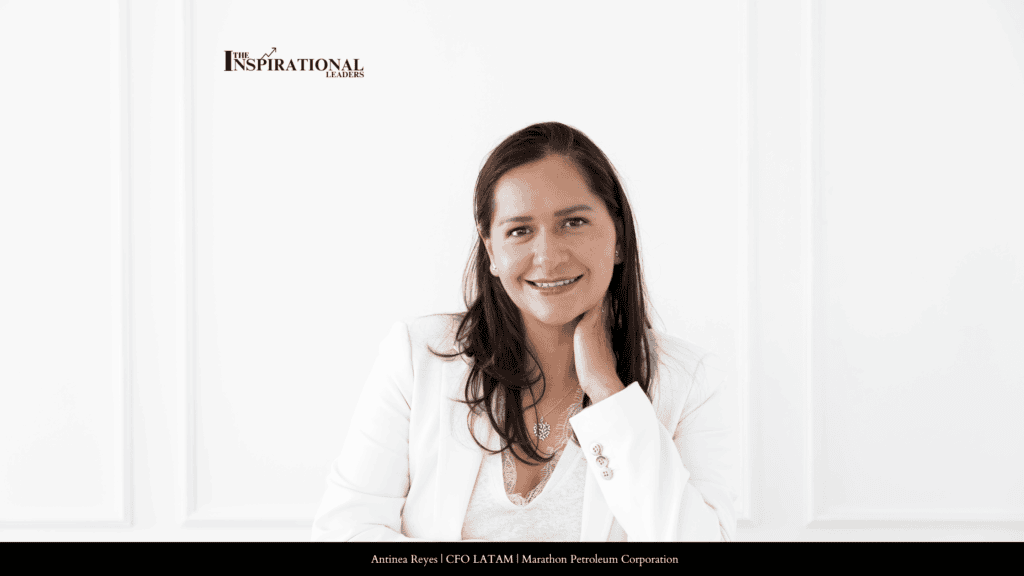
Few leaders embody this evolution as clearly as Antinea Reyes. With a career spanning organizations such as General Electric, The Estée Lauder Companies, and Marathon Petroleum Corporation, Antinea has built her leadership philosophy in some of the world’s most demanding and competitive business environments. Much of her professional experience has been rooted in Latin American markets, where volatility is not an exception but often the operating reality. Financial crises, hyperinflationary economies, and unpredictable commodity cycles shaped her understanding of leadership early in her career, forcing her to develop a perspective that extends far beyond traditional finance.
For Antinea, finance has never been simply about reporting performance or managing spreadsheets. It has always been about understanding how organizations make decisions, how value is created, and how leadership influences both culture and long term outcomes. Those experiences taught her one of the most defining lessons of her career: in uncertain environments, leadership is not driven by perfect data. It is driven by judgment, adaptability, and people.
“Decision making is not about perfect data, it is about strong judgment and the right teams,” she explains.
That perspective has become central to the way she approaches leadership today. While many organizations still view finance primarily as a control function, Antinea believes its true role is far more strategic. Finance, in her view, should sit at the center of business direction, helping organizations navigate uncertainty while shaping growth, transformation, and innovation.
Her journey has also been deeply influenced by another dimension that extends beyond corporate leadership. Antinea has become a passionate advocate for expanding opportunities for women, particularly across Latin America, where economic inequality and gender limitations still restrict the futures of many young girls. As Global Advisor to the Financial Empowerment and Policies wing of the G100, she works alongside other women leaders committed to advancing access, opportunity, and financial independence for future generations. For her, leadership is not only about performance metrics or business results. It is about creating environments where people can grow, contribute, and build better futures for themselves and others.
Leadership Built Through Volatility and Complexity
Some careers are shaped by stability. Others are shaped by constant transformation. Antinea’s belongs firmly to the latter. Operating across Latin American markets exposed her to conditions that demanded resilience at every level. Economic instability, inflationary pressure, currency fluctuations, and changing political environments required leaders to make high stakes decisions without always having access to perfect or complete information. These experiences fundamentally changed the way she understood leadership.
In volatile environments, spreadsheets alone do not provide clarity. Data can be delayed, incomplete, or unreliable. What ultimately determines outcomes is the quality of judgment behind the decisions and the strength of the people making them.
This realization reinforced her belief that organizations succeed when they are built around strong teams with diverse perspectives and the ability to navigate ambiguity confidently. It also strengthened her appreciation for the importance of surrounding yourself with the right people.
Referencing Jim Collins’ well known insight from Good to Great, she reflects on a philosophy that has remained central throughout her career: “People are not your greatest asset. The right people are.”
Working within globally recognized organizations exposed her to exceptional leaders who established high standards for excellence and execution. At the same time, she also encountered leadership styles that demonstrated exactly what leadership should not become. Those experiences became equally valuable, shaping her understanding of the type of environment she wanted to create for others.
Over time, Antinea developed a leadership approach grounded in transparency, empowerment, and strategic clarity. Rather than leading through authority alone, she focuses on building alignment, encouraging independent thinking, and fostering accountability across teams.
This philosophy became particularly important during one of the most defining moments of her career: leading a global organizational restructuring driven not by strategic expansion, but by financial constraint.
The transformation impacted more than 50 CFO roles globally and carried enormous operational and leadership pressure. The decisions involved were not theoretical exercises. Every move carried real consequences for people, performance, and the future structure of the organization.
There were difficult questions that could not be answered with certainty. Would the new operating model succeed? Had the organization underestimated the level of support required for execution? Would the cost savings ultimately compromise performance? In moments like these, Antinea learned that stability does not come from structure alone. It comes from leadership.
She focused on maintaining clarity of purpose, ensuring teams understood what truly mattered, while also prioritizing transparency and empowerment. Rather than creating fear driven environments, she encouraged ownership and decisive action. The experience reinforced her belief that transformation succeeds when leaders trust capable people, communicate clearly, and remain adaptable under pressure.
Redefining the Role of Finance Leadership
As organizations continue to evolve, Antinea believes finance leaders must redefine how they contribute to business growth. Historically, finance has often been positioned as a back office function centered on control, reporting, and operational oversight. Antinea rejects that limitation entirely. For her, finance belongs at the front line of strategic decision making.
“I’ve never believed in the concept of traditional finance,” she says. “Finance should not follow decisions, it should help shape them.”
That mindset reflects a broader transformation taking place across global business leadership. Modern finance executives are now expected to connect financial insight directly to strategic direction. They must understand how technological disruption reshapes industries, anticipate market shifts before they occur, and allocate resources in ways that align execution with long term vision. This requires a fundamentally different type of leadership capability.
Today’s financial leaders are not simply evaluating performance after decisions are made. They are participating in the decisions themselves. They must balance expectations across boards, investors, regulators, and employees while maintaining trust and credibility in increasingly complex environments.
For Antinea, credibility has become one of the defining currencies of leadership. Influence is no longer tied purely to authority or title. It is tied to the ability to communicate clearly, make intentional decisions, and consistently deliver meaningful outcomes. In uncertain business climates, organizations place greater value on leaders who can combine analytical rigor with sound judgment and emotional intelligence. This is especially critical in environments shaped by rapid technological acceleration and global instability.
Decision Making in an Unpredictable World
Modern leadership requires the ability to act decisively without becoming rigid. Antinea believes this balance is one of the most important leadership capabilities organizations need today.
The global business environment is now shaped by overlapping disruptions. Geopolitical instability, evolving supply chains, technological innovation, and unpredictable economic cycles continue to challenge traditional planning models. In this environment, leaders cannot rely solely on static forecasts or perfect assumptions. Instead, Antinea emphasizes the importance of multi scenario thinking.
For her, strategic planning is not about building perfect models that predict every outcome. It is about maintaining continuous strategic dialogue around possibilities and preparing organizations to respond quickly when circumstances change.
“What if demand drops unexpectedly? What if supply chains shift? What if the unlikely happens?” she explains.
These questions are not exercises in pessimism. They are exercises in preparedness. The objective is not to predict the future with certainty. It is to create organizations capable of responding effectively regardless of what happens next. That requires leaders who can move with conviction while remaining flexible enough to adjust direction when needed.
Antinea also believes strategy loses effectiveness when it is not consistently communicated across the organization. Alignment cannot exist if clarity only exists at the executive level. Teams need repeated reinforcement around priorities, direction, and expectations in order to execute effectively during periods of uncertainty. This emphasis on communication reflects her broader belief that leadership is ultimately about creating confidence amid complexity.
The Rise of Smarter, More Adaptive Organizations
Technology is rapidly transforming the future of finance, but Antinea approaches this transformation with both enthusiasm and realism. Artificial intelligence is already reshaping operational processes, forecasting capabilities, and financial analysis. Organizations are gaining access to faster insights, improved efficiency, and increasingly sophisticated decision support systems. Companies such as Microsoft and Google continue accelerating innovation at a pace that signals just how quickly the landscape is evolving.
For Antinea, however, technology should enhance leadership rather than replace critical thinking. “If you haven’t embraced AI, you are already behind,” she says. “But while AI enhances speed and efficiency, it does not replace critical thinking.”
This distinction is critical. As organizations integrate AI more deeply into operations, leaders must ensure that future generations continue developing analytical reasoning, judgment, and strategic thinking capabilities. Technology can process information at extraordinary speed, but leadership still requires human perspective, ethical reasoning, and contextual understanding.
Antinea is also closely watching the growing influence of ESG and sustainability on financial strategy. These issues are no longer external corporate initiatives operating separately from core business priorities. They are actively influencing investment decisions, shareholder expectations, and long term company valuations.
At the same time, geopolitical shifts and supply chain restructuring are forcing organizations to rethink how they operate globally. Leaders who treat these developments merely as disruptions risk falling behind. Antinea believes the organizations that succeed will be the ones that recognize these changes as opportunities to redefine strategy, strengthen resilience, and build smarter operating models.
Continuous learning therefore becomes essential. For Antinea, leadership today requires staying deeply connected to emerging ideas, evolving technologies, and broader market conversations. Networks matter because they provide perspective beyond one’s immediate environment. Leaders cannot afford to operate in isolation while industries transform around them.
Equally important is fostering curiosity within teams. Antinea recognizes that younger generations often think faster, challenge assumptions more openly, and adapt more naturally to rapid change. Rather than resisting those differences, she believes leaders should channel that energy productively.
Building Teams That Create Lasting Impact
Despite all the discussions around technology, strategy, and innovation, Antinea remains convinced that leadership ultimately comes back to people.
High performing teams are never accidental. They are intentionally built through trust, diversity of thought, accountability, and shared purpose. The strongest teams are composed of individuals willing to challenge perspectives, take ownership, and consistently execute at high levels.
One phrase has become deeply connected to her personal leadership philosophy: “I make things happen.”
She recalls being advised at one point not to use the phrase because too many professionals claimed the same thing. But her experience taught her otherwise. Many people discuss ambition. Far fewer consistently execute.
For Antinea, execution matters because the future belongs not to those who react fastest, but to those who anticipate and shape what comes next.
Creating the right environment for teams is equally important. She believes people perform best when they feel safe speaking openly, contributing diverse viewpoints, and collaborating toward common goals. Leadership therefore involves investing in development, mentorship, and opportunities for growth rather than relying on control or micromanagement.
“Micromanagement has no place in high performing teams,” she says firmly.
Her approach also reflects a strong belief in balance, something she considers essential for sustainable leadership. Professional success cannot come at the expense of physical health, mental wellbeing, or meaningful personal relationships. Leadership requires energy, clarity, and resilience. Without balance, those qualities eventually diminish.
Her passion for open water swimming reflects the same discipline and balance she brings to leadership. Since 2012, she has competed in open water events, demonstrating consistent dedication to the sport. Her tenacity and commitment led her to the podium in 2024, where she secured first place in a competition in Mexico. In unpredictable waters, success depends on endurance, adaptability, balance, and mental strength – the same qualities required to lead through complexity. For Antinea, it is more than a sport; it is a practice that reinforces resilience and the power of sustained effort.
Leadership Beyond the Corporate World
One of the most defining aspects of Antinea’s journey is the way she connects leadership with responsibility beyond business itself. Her commitment to supporting women and expanding opportunity is not separate from her leadership philosophy. It is part of it.
She speaks passionately about the realities many girls still face across Latin America, where access to education, financial independence, and personal choice remain limited. Too many are raised believing they have fewer rights, fewer opportunities, or fewer possibilities for shaping their own futures.
Antinea believes this reality must change. Through her work with the G100 and her mentorship of female executives, she actively supports women navigating their professional journeys, helping them accelerate growth, strengthen confidence, and recognize their full potential.
Leadership, in her view, is not simply about achieving personal success. It is about creating pathways for others to succeed as well.
That perspective gives her leadership style a deeper dimension. While she is highly strategic and performance driven, she also understands the broader human impact leadership can have across organizations, communities, and future generations.
A Leadership Philosophy Grounded in Purpose
As finance leadership continues evolving, Antinea Reyes represents a model of what modern executive leadership increasingly demands: strategic intelligence balanced by human perspective.
Her career has been shaped by volatility, transformation, global business complexity, and rapid technological change. Yet through every challenge, one principle has remained consistent. Leadership is not defined by authority alone. It is defined by the ability to stay ahead, make intentional decisions, and bring others forward along the way.
The executives creating lasting impact today are not simply reacting to change. They are anticipating it, adapting to it, and shaping what comes next with clarity and conviction.
At the same time, Antinea believes true leadership requires balance and self awareness. Before any title or executive responsibility, leaders remain human beings shaped by values, relationships, and the need for perspective. Sustained leadership is only possible when individuals protect the personal foundations that allow them to lead effectively over time.
In the end, her philosophy extends far beyond finance itself. Numbers may measure performance, but leadership is ultimately measured by something far more lasting: the people empowered, the opportunities created, and the impact left behind.