Beyond the Courtroom: Rima Kamal on Litigation, Leadership and the Future of Dispute Resolution
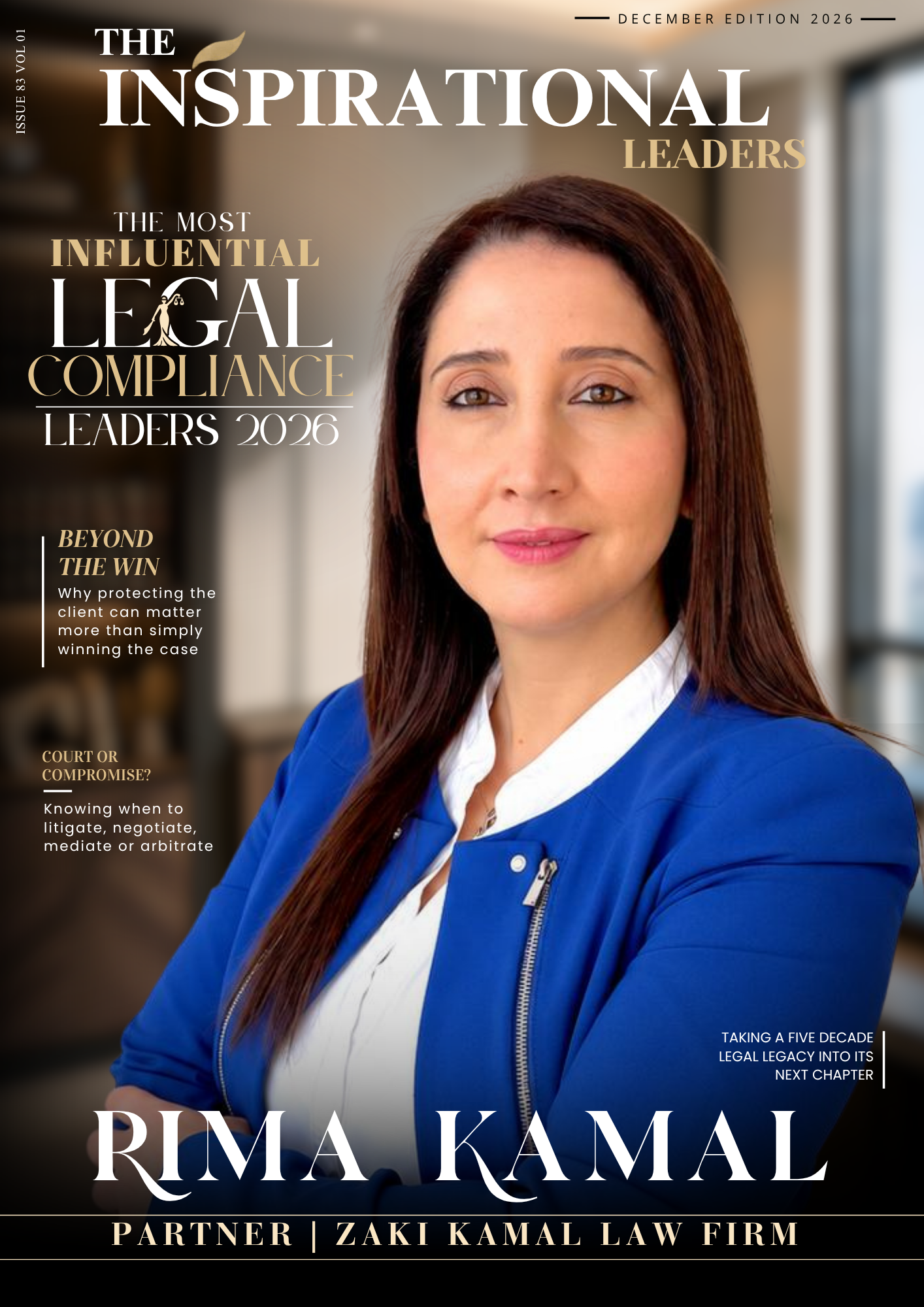
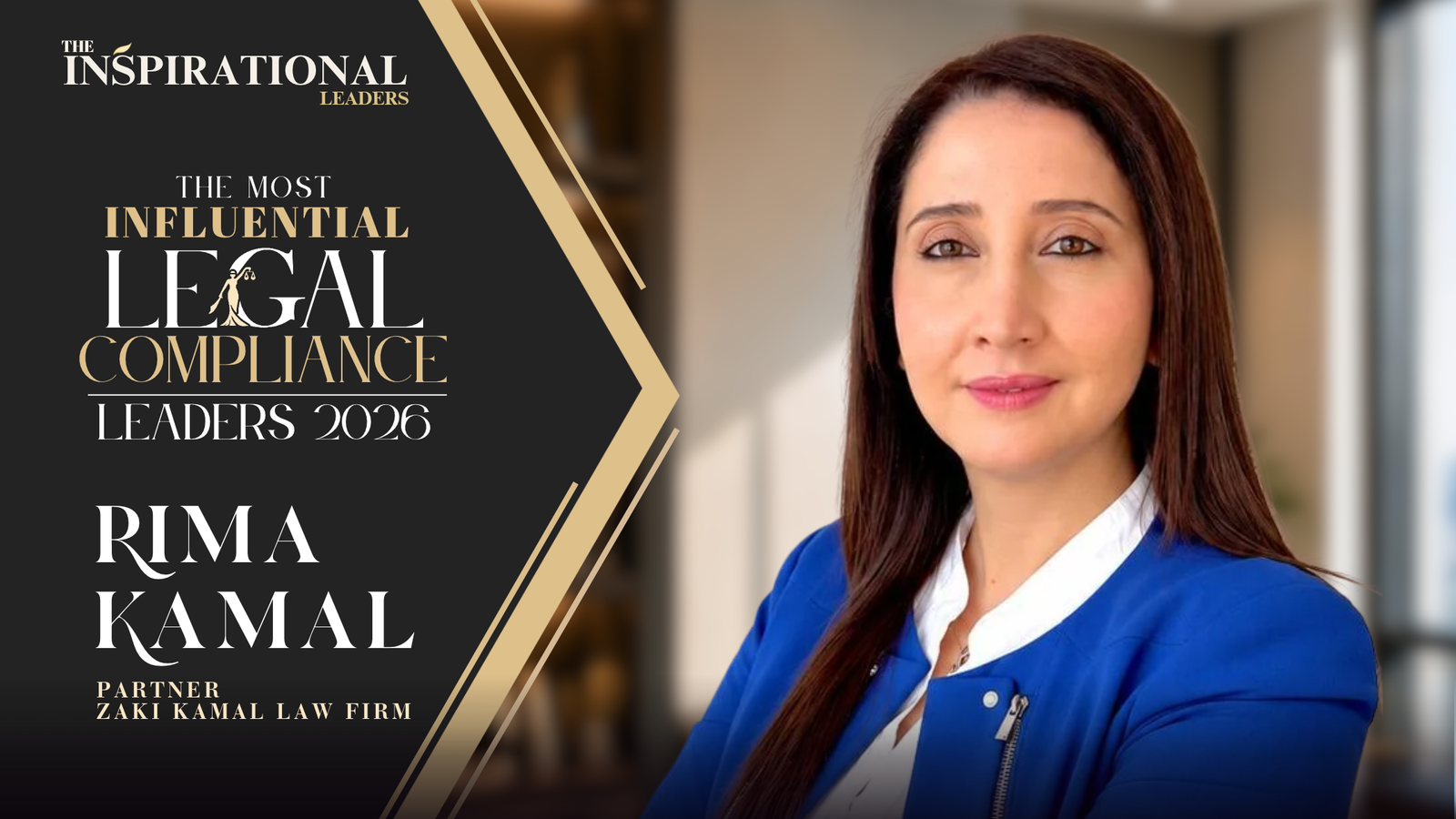
Digital Magazine For Rima Kamal, MCIArb, law was part of life long before it became her profession. Her father, Adv. Zaki Kamal, founded Zaki Kamal Law Firm in 1972, where she is now a Senior Partner and leads the firm’s litigation practice. Her mother, Ada Kamal, was a jurist and mediator. Growing up, Kamal met judges and lawyers from Israel and abroad, giving her an early understanding of law as a profession that carries responsibility and can make a real difference in people’s lives. Kamal completed her LL.B. with honors at 21 and later earned an LL.M. in Commercial Law from Tel Aviv University. At 25, she was appointed to the board of Amidar – National Israel Housing Company Ltd. She later served as a director of ASHRA – Israel Foreign Trade Insurance Corporation Ltd., Mekorot – Israel National Water Company, and the Europe Asia Pipeline Company Ltd., and as a member of Israel’s Civil Service Commission. These roles gave her practical experience of corporate governance, business decision-making and public responsibility. . At the same time, she built her practice in complex civil and commercial litigation, representing companies, commercial entities, public authorities and private clients. Her work in mediation and arbitration led to a growing interest in other ways of resolving disputes. She became a mediator and later expanded her work into international commercial arbitration. She is a Member of the Chartered Institute of Arbitrators and holds the MCIArb designation. For Kamal, litigation, mediation and arbitration are not separate professional worlds. Together, they allow her to look at a dispute from different perspectives: as counsel, mediator and arbitrator. Justice and Professional Responsibility Kamal’s decision to study law was influenced by the environment in which she grew up, but also by her belief that law could make a difference in people’s lives. She began her career with a certain idealism and a belief that the legal system could deliver justice. After more than two decades and thousands of cases, her view is more nuanced. She does not believe that absolute justice can always be achieved through legal proceedings. Courts operate within a complex human and institutional reality. Even so, she believes a stable and reliable legal system is essential. Professional responsibility has become central to the way she practices law. A lawyer’s duty, in her view, is to protect the client and advance the client’s interests. Sometimes that also means saying something the client does not want to hear. “Sometimes protecting a client also means protecting them from themselves, from decisions driven by anger, fear or the desire to win at any cost.” Lawyers are also officers of the court. Commitment to a client cannot come at the expense of professional integrity or duties to the court. For Kamal, success is therefore not measured only by whether a case was won, but also by whether the client was protected, honestly advised and placed in a better position. Strategy Starts Before the Courtroom As a Senior Partner leading the firm’s litigation practice and handling complex civil and commercial disputes, Kamal works on matters that may involve significant financial exposure and wider business consequences. Understanding the facts and the law is only part of the job. She also uses independent judgment to assess the client’s objectives, risks and alternatives. Sometimes litigation through judgment is the right course; in other cases, negotiation, mediation or arbitration may better serve the client. Professional ethics are part of that decision-making. Kamal served for several years on the National Ethics Committee of the Israel Bar Association, taking part in discussions and decisions concerning professional ethics. That experience reinforced something she strongly believes: “Professional ethics are not in conflict with our duty to the client. They are part of that duty.” Building Her Own Professional Path Because Kamal joined the firm founded by her father, it might be easy to assume that her path to partnership was already laid out. She first worked at the firm as a law student, left to complete her legal internship at a court, and returned as a qualified lawyer determined to build her own professional standing. Over the years, she gradually took responsibility for significant cases and represented companies, corporate officers and directors. In time, some clients began specifically asking for her to handle their matters. Taking responsibility for leading the litigation practice was an important turning point. It taught her that leadership is about more than being a good lawyer. It also means building a team, choosing the right people, delegating responsibility and deciding who can be trusted with clients who have placed their confidence in the firm. One principle has stayed with her: “Every client should feel as though their case is the only case we are handling.” For Kamal, leadership is built through trust, responsibility, consistency and the standards you set for yourself and your team. Thinking in Micro, Macro and Several Moves Ahead Kamal approaches a case analytically, breaking the issues into smaller parts while looking at how they fit into the wider legal, commercial and strategic picture. This analytical way of thinking began to take shape early, in high school, where she specialized in mathematics and physics. The habit of breaking down complex problems and understanding how the different parts connect has stayed with her throughout her legal career. She describes building a kind of matrix in her mind: the main issues, how they connect, the strengths of the case, areas of exposure and how each decision may affect the whole. From there, she thinks several moves ahead, considering how the other side may respond and what different scenarios could mean for the client, including outcomes the client may not want. Discussion within the team also matters. Another perspective can challenge an assumption or reveal something that has been missed. But however sophisticated the strategy, Kamal believes it must be one she can stand behind professionally and ethically. Not Every Resolution Is a Compromise Working as both a mediator and an arbitrator has given Kamal different ways