
Top Business Leaders | Inspirational Leadership for Success

Empowering Financial Transformation and SMEs — Patrycja Strzelecka’s Vision as Co-founder and CCO of CashDirector

Digital Version In Poland’s increasingly dynamic business landscape, the intersection of technology, finance, and entrepreneurship is creating new opportunities for growth and innovation. At the forefront of this movement is Patrycja Strzelecka, Co-founder and Chief Commercial Officer of CashDirector, a pioneering fintech company redefining the way small businesses manage their finances. Her professional journey is a powerful testament to visionary leadership, resilience, and the belief that technology can democratize access to financial services for all. What begins with a vision becomes a movement — when it’s fueled by clarity, commitment, and the courage to reinvent what’s possible. Patrycja Strzelecka’s career is not just a story of fintech innovation, but of bold leadership, purposeful risk-taking, and an unwavering drive to empower others at every step. The Inspiration Behind CashDirector The idea for CashDirector was born from a clear and urgent need: to revolutionize the delivery of accounting services to micro and small businesses. Drawing on years of experience in financial outsourcing and a successful exit from their first venture, Patrycja and her team recognized that millions of small enterprises lacked access to affordable, intuitive financial management tools typically reserved for large corporations. Additionally, they observed that many accountants were confined to repetitive tasks, limiting their potential for professional development. The vision was to digitize accounting, integrate it directly with online banking, and create a seamless, empowering financial management experience for SMEs. “Our journey has been about consistently realizing this vision,” Patrycja shares. In 2016, CashDirector achieved a milestone by executing the first full integration of a cloud-based accounting system with online banking in Europe. Since then, the company has expanded its reach significantly, now serving 250,000 users and collaborating with six major banks in Poland. Initially envisioned as a pure SaaS platform, CashDirector quickly evolved into a comprehensive Tech-Enabled Accounting Services provider. Recognizing that clients needed full-service offerings, including handling tax and accounting matters, the company’s technology now enables accountants to manage up to 150 micro-companies per month — an extraordinary leap in efficiency and scale. Balancing Strategy with Innovation and Agility As Managing Director, Patrycja embraces a leadership philosophy centered around trust and transparency. She fosters an environment where innovation thrives, encouraging her team to experiment, propose ideas, and learn from their experiences. “I believe in a participative leadership style — encouraging decision-making, solution testing, and quick learning from mistakes,” she explains. Setting clear strategic goals provides a vital compass, ensuring that creativity is aligned with the company’s mission and market needs. Patrycja’s approach to leadership highlights the importance of balancing ambition with clarity. Strategy, in her view, must be flexible enough to adapt to new realities but structured enough to provide direction. By embedding openness, mutual respect, and continuous improvement into CashDirector’s culture, she has cultivated a resilient and dynamic team capable of thriving in the fast-moving fintech sector. Modernizing SME Banking: Overcoming Challenges Introducing innovation into traditional industries often means challenging established mindsets. For CashDirector, one of the greatest hurdles was winning the trust of both banks and small business owners — stakeholders who are, by nature, cautious and skeptical of new technologies. The solution was simple but powerful: deliver measurable results. By demonstrating how their platform could save time, reduce costs, and minimize financial risks, Patrycja and her team slowly but steadily built confidence among their partners. Banks came to realize that integrating accounting and banking services into a single, user-friendly platform could provide them with a competitive edge. It allowed them to deepen customer relationships, increase transaction volumes, and enhance user loyalty. Strategic partnerships with forward-thinking banks became instrumental in scaling the adoption of CashDirector’s services, ultimately setting a new standard for SME banking in Poland. A Career Shaped by Global and Entrepreneurial Experience Patrycja’s career path reflects a unique blend of corporate rigor and entrepreneurial daring. She began her professional journey in global organizations such as AT&T and Raiffeisen Bank, where she honed her leadership skills, mastered large-scale project management, and learned to navigate complex, international environments. “Working in these well-organized structures was like a practical MBA,” she reflects. After nearly a decade in the corporate world, Patrycja made the conscious decision to transition into entrepreneurship. She wanted the freedom to innovate, to build something impactful, and to invest her energy and resources into projects she believed in. The combination of corporate discipline, startup agility, and international perspective equipped her with the resilience and adaptability necessary to lead a fintech venture in today’s volatile business environment. Above all, it gave her the ability to recognize moments of transformation and the courage to act upon them — a skill that has proved invaluable throughout her journey. Empowering Small Businesses Across Borders At its core, CashDirector is about empowerment — giving even the smallest businesses access to the kind of real-time financial insights and tools traditionally available only to large enterprises. The company’s platform integrates seamlessly with banking services, offering users a full suite of capabilities: financial data organization and visualization, automatic cash flow forecasting, intelligent reminders, receivables and payables monitoring, direct payment functionality, and even automated settlements with national authorities. Beyond technology, CashDirector also uplifts the accounting sector through OSCBR, a network of 3,000 modern accounting partners. Through this initiative, accountants receive training, technology, and support designed to help them unlock new levels of efficiency and client service. “Our mission is to democratize access to high-quality financial management and to transform the role of accountants from number-crunchers to strategic advisors,” Patrycja emphasizes. Women don’t need to wait until they’re ‘ready’ — they already are. Confidence comes from stepping in and speaking up. Guiding Principles Behind CashDirector’s Vision Patrycja’s leadership is deeply rooted in two core principles: “Think big” and “Give first.” Thinking big drives her to set ambitious, global goals — envisioning CashDirector not merely as a Polish success story, but as a European standard-bearer for SME-focused digital ecosystems. Giving first reflects her commitment to sharing knowledge, supporting others, and building authentic partnerships grounded in mutual trust. Diversity, transparency, and authenticity are not just buzzwords in Patrycja’s
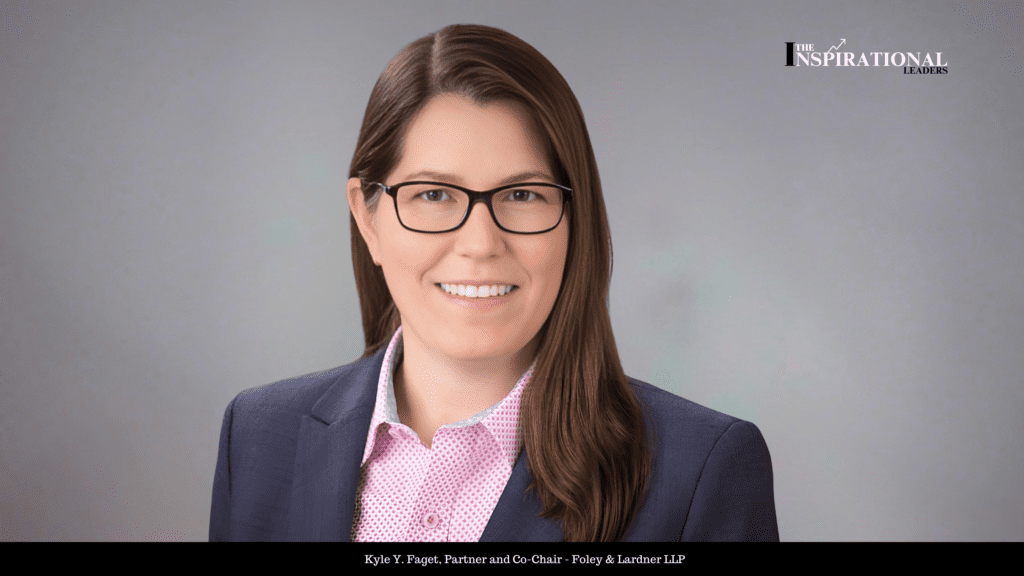
Driving Telehealth Transformation: Kyle Y. Faget’s Vision for the Future of Healthcare

Digital Version In the rapidly evolving world of healthcare, few leaders have left as profound a mark as Kyle Y. Faget, Partner and Co-Chair of the Health Care & Life Sciences Sector – Medical Devices at Foley & Lardner LLP. Recognized among 2025’s Most Influential Leaders Advancing Telehealth Transformation, Faget’s journey weaves together science, law, innovation, and personal experience, positioning her as a true catalyst in the transformation of healthcare delivery. A Personal Journey Into Healthcare Law For Faget, the path to healthcare law was shaped as much by intellectual passion as by personal experience. Before entering law school, she was a basic science researcher investigating the pathophysiology of Alzheimer’s disease and the genetic roots of Amyotrophic Lateral Sclerosis (ALS). That scientific grounding instilled a deep understanding of the challenges and possibilities in medicine. But it was a deeply personal encounter that sharpened her focus on telehealth. In 2017, after her late wife was misdiagnosed by several healthcare providers, it was a small telehealth practice that finally identified the root cause—stage IV lung cancer. This experience was a revelation for Faget. “That was the first time I witnessed telehealth being used,” she recalls. “I knew immediately this was the future of healthcare.” From that moment, she immersed herself in understanding the provider side of healthcare, diving into the complexities of digital health. Her commitment paid off during the COVID-19 pandemic, when telehealth surged as a preferred mode of care delivery. Today, as a leading voice in health law, Faget is helping shape a sector undergoing rapid transformation. Rooted in science, shaped by personal experience, and driven by purpose—this journey redefines what it means to lead with both heart and foresight in transforming healthcare for tomorrow. The Intersection of Law, Innovation, and Telehealth Faget sees the intersection of law, innovation, and healthcare as a pivotal moment in history. She notes that we are experiencing a time of rapid technological progress. Advances such as artificial intelligence (AI) and telehealth are transforming the way healthcare is provided, making it both more accessible and more effective. For example, decentralized clinical trials are leveraging AI and telehealth to increase efficiency, while digital health products for remote patient monitoring are allowing patients to better manage their health and intervene earlier when problems arise. “By improving how we monitor our health, we can take preventive action at the right time,” explains Faget. She sees enormous potential to improve overall population health, but also recognizes that this transformation comes with complex regulatory and strategic challenges. Innovation needs more than vision — it needs a legal strategy that understands its heartbeat. Guiding Innovators Through the Legal Landscape As Co-Chair of the Health Care & Life Sciences Sector – Medical Devices, Faget leads Foley & Lardner’s efforts to help innovators navigate a heavily regulated industry. Many entrepreneurs come to Foley eager to launch groundbreaking healthcare solutions, unaware of the intricate legal terrain. As Faget points out, the healthcare industry is one of the most heavily regulated sectors. Laws such as the corporate practice of medicine doctrine, which restricts non-professional corporations from practicing medicine or employing physicians, can complicate even the most promising business models. Additionally, the anti-kickback statute and state-level fee-splitting laws require careful structuring of financial arrangements. Faget and her team help clients understand these barriers and design compliant, scalable solutions. Navigating a Shifting Regulatory Environment The regulatory environment for telehealth is in flux, with state-level oversight creating a patchwork of requirements. From how clinician-patient relationships are established to licensing and practice standards, each state brings its own approach. Yet Faget sees progress: “More states are aligning on practice standards, and many are joining the interstate medical licensure compact, which streamlines physician licensing across member states.” At Foley, a team of attorneys track these regulatory shifts, helping clients remain compliant and competitive in an increasingly national marketplace. To lead in healthcare law, you must think like a historian and adapt like a futurist. Legal Foresight for Sustainable Telehealth Platforms For Faget, legal foresight is essential to long-term success in telehealth. When engaging with clients, she emphasizes the importance of mapping out short- and long-term goals. “Whether it’s a single-state platform or a national one, we help structure the offering from the outset,” she explains. For example, the corporate practice of medicine may not be an immediate concern for a local startup, but it becomes critical when expanding across state lines. Foley’s proactive approach ensures that clients build on a foundation that can evolve as they scale. The Convergence of Medical Devices and Telehealth Bringing together medical devices and telehealth systems is reshaping patient care by enabling real-time data sharing and remote monitoring, though this combination also introduces both advantages and challenges. Faget highlights the need to address user tech-savviness, especially among aging populations, and the importance of navigating reimbursement policies, as coverage is not always readily available. Still, she is optimistic: “As these tools become more mainstream, we’re likely to see more favorable coverage decisions.” Tailoring Legal Guidance to Support Innovation Faget’s legal philosophy centers on education and informed decision-making. Whether advising startups or major healthcare systems, her role is to help clients understand legal requirements and enforcement trends, empowering them to make well-informed business decisions. “This is always the magic question: how to balance innovation and risk,” she says. By demystifying the regulatory landscape, Faget ensures that innovation is not stifled by uncertainty. The Critical Role of Cross-Sector Collaboration The success of telehealth depends on cooperation among the technology, healthcare, legal, and regulatory fields. Faget highlights that meaningful change requires the combined efforts of all these sectors, as no single area can achieve it independently. “Healthcare intersects with numerous legal domains, making a collaborative approach highly valuable for clients,” she explains. Foley’s industry-focused structure promotes integrated teamwork across various specialties, including patent law, corporate governance, tax, labor and employment, healthcare regulations, and FDA compliance. This comprehensive approach supports clients throughout the full innovation process, from developing patent strategies to bringing products to market. Mentoring the Next Generation of Healthcare Attorneys

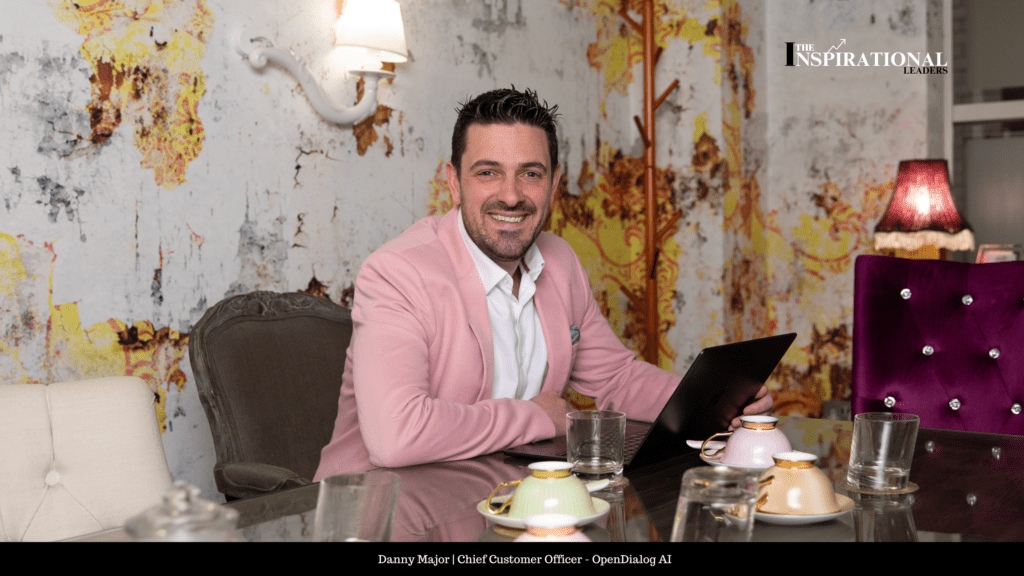
2025’s Most Influential Customer Leaders Powering Business Transformation

Digital Version In a business world increasingly shaped by rapid digital innovation, the role of customer leaders has transformed dramatically. Danny Major, serving as the Chief Customer Officer at OpenDialog AI, is leading this transformation. His approach goes far beyond traditional service delivery—he views customer leadership as a strategic enabler of both client and business success. For Danny, technology is simply a tool to achieve his goals. At OpenDialog AI, his core mission is to align cutting-edge conversational AI tools with tangible, measurable business outcomes. He places strong emphasis on helping clients navigate the complexities of an ever-evolving tech landscape while keeping their end goals front and center. This vision is not confined to his role alone—Danny fosters a company-wide culture of consultative, impact-driven thinking. His team is encouraged to see every interaction through the customer’s lens and to continuously explore how innovation can translate into real, sustainable transformation. customer leadership isn’t about overseeing interactions – it’s about unlocking potential at every touchpoint. In this AI-powered era, our mission is to humanize technology, build trust through intelligent dialogue, and turn every challenge into a growth story worth telling. Guiding Principles Behind Exceptional Customer Experiences At OpenDialog AI, the customer experience strategy is distilled into a powerful framework: “Understand, Educate, Execute, Evolve.” These four pillars serve as the foundation of every customer relationship. The journey begins with a deep understanding of each client’s strategic objectives, followed by a commitment to education. Especially in regulated sectors, helping clients gain clarity and confidence about AI adoption is crucial. Execution is the next step—tailored, outcome-driven deployments that fit the unique challenges of each organization. Finally, OpenDialog AI supports an evolutionary process, helping customers grow with the technology and continuously improve as their needs shift. This principle-based approach is deeply intertwined with the company’s mission: enabling businesses in complex, regulated industries to safely and confidently harness the potential of Generative AI. By aligning each project with the broader mission, OpenDialog creates not just solutions, but trusted partnerships. When Customer Insight Shapes Innovation Danny Major believes that the best innovations emerge directly from customer insight. A clear example of this was the development of the company’s Co-Pilot solution. Many clients were eager to implement AI, but hesitant to hand over full control to automated systems. In response, OpenDialog created a hybrid model, where AI works in tandem with human agents. By using this approach, clients could safely experiment with AI applications. It delivered faster call resolutions and higher accuracy, all while easing the path to digital transformation. Most importantly, it demonstrated how customer feedback could become the engine behind meaningful product development. In an era shaped by algorithms and automation, true leadership is measured by how deeply we understand people not just processes and how boldly we turn technology into trust. Driving Impact Through Conversational AI OpenDialog AI’s conversational agents are not simply tools—they are designed to become integral members of customer-facing teams. Capable of managing entire customer journeys, these agents bring personalization and contextual relevance to each interaction. This is especially critical in sectors where accuracy, clarity, and compliance are non-negotiable. Through these agents, businesses can not only reduce operational costs and compliance risks, but also boost satisfaction and engagement. From quoting to claims, OpenDialog’s AI ensures each interaction feels human, responsive, and aligned with the customer’s intent. This capability extends across industries, positioning OpenDialog’s platform as a versatile, future-ready solution for customer engagement. Measuring What Truly Matters Rather than relying solely on traditional KPIs, Danny takes a tailored approach to measuring customer success. While metrics like product utilization provide some insight, he places higher value on understanding what success looks like for each individual client. Reduced call handling time, improved customer experience scores, enhanced compliance—each of these could be a core outcome depending on the client’s priorities. This customized methodology ensures that every success strategy is rooted in what matters most to the customer. Danny and his team actively listen, ask the right questions, and design engagement strategies that reflect real-world impact. This personalized view of success makes the partnership stronger and the outcomes more meaningful. Keeping Humanity at the Center of Innovation With the rise of generative AI and automation, maintaining a human touch is more important than ever. Danny emphasizes that OpenDialog AI sees its agents not as replacements, but as collaborators. He often describes them as “silicon-based colleagues” who support the human workforce. In every implementation, Danny’s team works closely with clients to ensure their employees are prepared to manage and guide the AI systems. This human-in-the-loop model builds trust and empowers clients to take ownership of their AI journey. Co-creation, ethical oversight, and skill development are central to this strategy. By keeping humanity at the heart of innovation, OpenDialog helps clients move forward with confidence and care. Creating Unity Across Departments Cross-functional collaboration is key to customer success. At OpenDialog AI, Danny encourages what he calls the “empty chair” mindset. Every team is urged to consider the customer’s perspective in decision-making, as if the customer were present in the room. Customer insights are shared widely across departments, and clients are frequently invited to company meetings to share their stories firsthand. Such interactions enhance empathy and insight, helping sales, engineering, and product teams stay connected to real-world conditions. Additionally, structured feedback mechanisms ensure customer teams have a voice in product development and strategic planning. This open dialogue is instrumental in building a company culture where everyone is invested in customer success. Overcoming the Challenge of Scaling Personalization Scaling personalized experiences globally is no easy task. Danny identifies two main pitfalls: over-engineering from the start and relying too heavily on external advice. OpenDialog promotes an iterative, test-and-learn strategy that focuses on gradually building success through incremental achievements. By collaborating closely with clients and drawing from their internal expertise, the company develops solutions that are not only personalized but also scalable. This co-created path allows for adaptability, ensuring solutions evolve with changing market and organizational needs. Through this approach, OpenDialog helps clients

Bernardo Nicoletti: Merging Lean Thinking with Digital Transformation to Redefine Procurement and Supply Chain Excellence

Digital Version Few leaders have shaped the procurement and supply chain landscape as extensively as Bernardo Nicoletti, whose work seamlessly integrates Lean Six Sigma principles with cutting-edge digital innovation. Nicoletti has played a key role in advancing procurement and supply chain management for years, serving as a professor, consultant, and author. He has provided guidance to international businesses and shared his expertise with aspiring leaders at universities such as Temple University Rome and the University of Rome Tor Vergata. In this exclusive feature for Visionary Leaders Transforming Procurement and Supply Chain Strategy – 2025, Bernardo Nicoletti reflects on the evolution of the field, the role of innovation, and the strategic mindset required for lasting success in a complex, digital-first world. I believe in transforming procurement from a cost-driven function into a strategic force – where lean thinking, digital innovation, and human insight work together to deliver lasting value. The Power of Lean Six Sigma and Digitalization Nicoletti’s extensive background in Lean Six Sigma and process digitization has fundamentally reshaped procurement practices across industries. “The procurement and supply chain management field has been profoundly transformed in recent decades,” he explains, “driven by the strong synergy between Lean Six Sigma methodologies and digital technologies.” Lean Six Sigma—rooted in the Toyota Production System—focuses on improving value to the customer, minimizing waste and reducing variation. These principles, when applied to procurement, optimize sourcing, streamline supplier interactions, and shorten lead times. But Nicoletti points out that digitalization has exponentially amplified these benefits. “Technologies such as AI, IoT, and robotic process automation are no longer just add-ons—they are integral to creating agile, responsive, and resilient systems,” he says. For instance, AI can now accurately predict demand, optimize supplier choices, and analyze risks in real-time. IoT devices track inventory and transportation, while RPA removes bottlenecks in administrative workflows. Yet, Nicoletti is pragmatic: “Only a limited number of companies have fully embraced this convergence. Where it has been implemented, the impact has been transformational—from cost savings and efficiency to enhanced service quality and customer delight.” The Challenges Behind the Transformation Many organizations still encounter substantial challenges, despite the obvious benefits of digital integration. “Siloed structures and outdated ERP systems are often at the root of the problem,” Nicoletti notes. These legacy technologies create friction when integrating modern tools like AI or blockchain. Talent scarcity—especially in data science, cybersecurity, and AI—adds another layer of difficulty. Geopolitical instability, climate disruptions, and increased scrutiny around data privacy further complicate supply chain strategies. According to Nicoletti, success hinges on a comprehensive approach, encompassing technological investment, organizational redesign, change management, and talent development. This approach requires a Total Procurement approach similar to Total Quality which involves all the parties in the improvement projects. On this respect, also the involvement of the main vendors is essential to optimize the full chain. “He emphasizes the crucial role of strong cybersecurity and efficient data governance. “As data is the foundation of contemporary supply chains, cleaning and protecting it is vital,” he explains.” Why Digital Innovation Is No Longer Optional Nicoletti views digital innovation as the cornerstone of modern supply chains. “AI, blockchain, automation, IoT—these are not trends. They are the drivers of operational excellence,” he asserts. They should apply to procurement which includes from 50% to 80% of the operating costs of an organization, be it private or public. Artificial intelligence and machine learning are transforming the ways demand forecasting, vendor selection and evaluation, risk management, and warehouse automation are approached. RPA handles repetitive tasks such as purchase order creation or invoice matching, freeing teams for more strategic work. Blockchain introduces traceability, fraud prevention, and secure recordkeeping, especially in complex, multi-tier supply networks. IoT delivers real-time tracking, while cloud platforms ensure scalable, agile operations. But Nicoletti also highlights a critical balancing act. “Technology cannot replace human judgment. The organizations that succeed will be those that combine digital tools with human insight, ethical leadership, and lean thinking.” Real-World Results Through Lean + Digitize Nicoletti’s consulting experience spans 10 countries and clients such as General Electric, Deutsche Bank, Generali, Santander Nordic, and Intesa Sanpaolo. One case, he recalls, illustrates the power of an integrated strategy. “A multinational manufacturing company was struggling with fragmented procurement,” he says. “By centralizing indirect spend, consolidating vendors, and introducing an eProcurement platform based on lean principles, they cut indirect costs by 15% and slashed order lead times by 50%.” This company is now investing in AI and expects an additional saving of at least 20%. The transformation also standardized processes, reduced waste, and fostered stronger vendor partnerships. “This is the kind of holistic approach that delivers measurable, sustainable results,” Nicoletti adds. Lean in Bureaucratic Environments: A Pragmatic Approach One of the more challenging aspects of Nicoletti’s work involves applying lean methodologies in complex, bureaucratic environments—often in public institutions or heavily regulated sectors. “You have to start with a clear-eyed assessment of where waste exists,” he says. “Then prioritize areas with the greatest potential for quick wins.” These might include digitizing vendor onboarding, reducing redundant approval loops, preparing effective contracts,  or standardizing documentation. . Generative AI can help a lot in this respect. Commercial solutions are already available and will transform the work of the buyers. Tools like Kanban boards, visual dashboards, and just-in-time inventory systems can be remarkably effective. But perhaps most important, Nicoletti says, is cultivating a culture where frontline employees are empowered to identify and eliminate inefficiencies. “It’s not just about technology or process—it’s about mindset and collaboration,” he notes, especially when working with legal and finance departments to streamline workflows. The Academic Lens: Educating the Next Generation Nicoletti plays a significant role in shaping the future of procurement and supply chain professionals through his work as an educator. At the University of Rome Tor Vergata and other institutions, he connects theoretical knowledge with real-world application. “Academic institutions play a critical role in equipping students with the tools to manage real-world complexity,” he says. From case studies and simulations to industry partnerships and research, universities are evolving to reflect modern challenges. Nicoletti himself is

Scroll to Top