
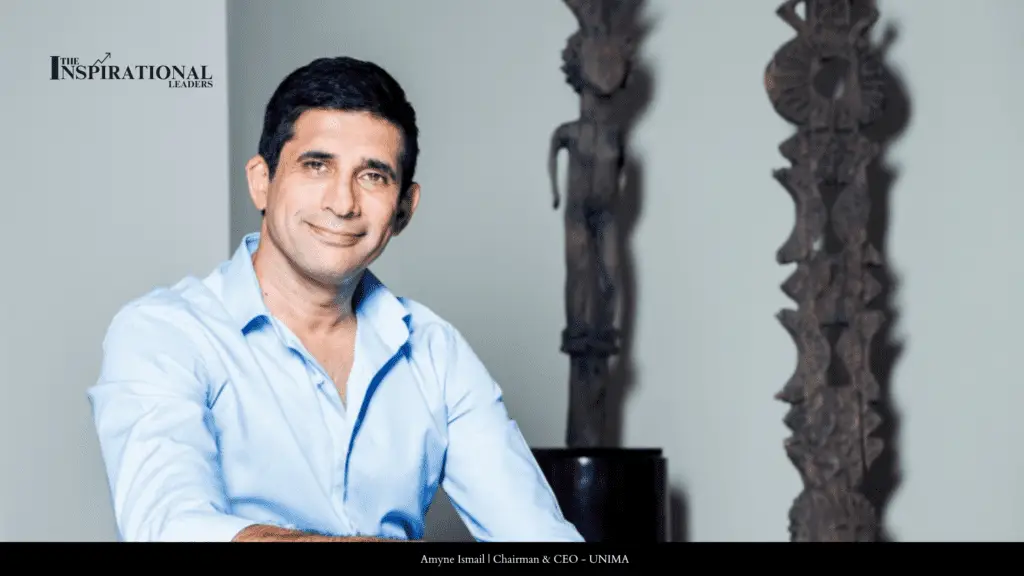
In a world where aquaculture is often judged by yield, scale, and speed, Amyne Ismail stands apart. His leadership is not driven by the pursuit of volume at any cost, but by a deeper, more demanding ambition—to ensure that food production restores life rather than depletes it. As Chairman and CEO of UNIMA, one of the world’s most respected shrimp producers, Ismail has spent decades quietly proving that aquaculture can be ethical, regenerative, and economically resilient all at once.
From the mangrove-lined coasts of Madagascar to the plates of discerning consumers across Europe and beyond, UNIMA’s story is inseparable from Ismail’s own. It is a story shaped by heritage, responsibility, and a profound respect for ecosystems and communities. At a time when global aquaculture faces mounting pressure from climate change, disease, and public scrutiny, Amyne Ismail’s approach offers not just an alternative model—but a compelling blueprint for the future.
A Legacy Rooted in Place, People, and Purpose
Amyne Ismail’s journey with UNIMA is not simply professional; it is deeply personal. Founded in 1965 by his father, UNIMA began at a time when Madagascar shrimp was largely unknown on the global stage. Long before sustainability became a corporate catchphrase, the Ismail family was building a business in close contact with nature and rural communities, learning firsthand what it means to operate in fragile ecosystems.
Growing up between Antananarivo and Madagascar’s coastal mangroves, Ismail was exposed early to contrasts that would shape his worldview. On one side stood the realities of rural life—limited infrastructure, deep reliance on natural resources, and communities whose livelihoods were inseparable from their environment. On the other stood the demands of international markets and global trade. Rather than seeing these as opposing forces, Ismail learned to view them as responsibilities that must be balanced.
From the outset of his leadership journey, he was clear on one thing: UNIMA would not grow “at any price.” When the group launched Aqualma in the late 1980s and 1990s, the ambition was radical for its time—to create a distinctly Malagasy ecological model for shrimp farming, one that respected ecosystems, honored people, and safeguarded long-term value. UNIMA became one of the early pioneers in domesticated black tiger shrimp, choosing not to extract broodstock from the wild and thereby reducing pressure on marine biodiversity.
Ismail’s progression through the company was deliberate. Starting in legal and strategic roles, he moved into full operational leadership as CEO in 1998 and later assumed the dual role of Chairman and CEO in 2014. Yet, as he often reflects, managing a shrimp company taught him that leadership extends far beyond operational efficiency. His real task, as he sees it, is to protect a coastline, uphold the dignity of a country, and remain accountable to consumers who trust what they put on their plates.
A Vision Beyond Sustainability: Toward Regenerative Aquaculture
For Amyne Ismail, sustainability is not the destination—it is merely the starting point. His long-term vision for UNIMA is clear and uncompromising: farms and fisheries must restore more life than they extract. This philosophy lies at the heart of what UNIMA defines as regenerative aquaculture.
Over nearly four decades, UNIMA has refined a low-density farming model that stands in stark contrast to many intensive systems. While some operations stock close to two hundred shrimp per square meter, UNIMA maintains densities of approximately fifteen to twenty-five. This approach reduces stress on animals, lowers disease risk, and preserves surrounding ecosystems.
The environmental impact of this model is measurable and significant. UNIMA helps preserve more than fifty-one thousand hectares of natural areas across Madagascar and has supported extensive reforestation efforts, with approximately 3.5 million trees planted—one million of them mangroves. These mangroves serve not only as biodiversity hotspots but also as powerful natural carbon sinks and coastal protectors.
Ismail’s ambition goes far beyond producing premium shrimp. His goal is to demonstrate that a company rooted in the global South can define global standards—whether in taste, animal welfare, climate responsibility, or biodiversity protection. UNIMA’s achievements speak for themselves: Label Rouge certification in France, organic certification for part of its range, ASC certification, and compliance with the highest food safety standards.
For Ismail, the future of aquaculture belongs to those who successfully unite science, culture, and ethics. When aquaculture lifts rural families, restores mangroves, and delivers exceptional quality, it moves beyond sustainability into something far more powerful—a regenerative force for both people and planet.
Innovation as a Tool for Integrity, Not Excess
At UNIMA, innovation is not pursued for novelty or scale alone. Instead, it is treated as a necessity—a survival instinct deployed in service of regenerative principles. Ismail is clear that technology has value only when it strengthens ecosystems, empowers communities, and enhances product quality simultaneously.
UNIMA’s operations are fully integrated, spanning domesticated broodstock management, hatcheries, feed mills, farms, processing facilities, and global distribution. This integration ensures high levels of traceability and biosecurity while reducing reliance on external inputs that can compromise sustainability. Antibiotics are avoided, land animal proteins are excluded from feed, and low stocking densities remain non-negotiable.
Automation plays a growing role in feeding, aeration, and energy efficiency, ensuring that every kilowatt and every kilogram of feed is used responsibly. Data-driven decision-making guides pond performance, water quality management, animal health, and weather adaptation, all within strict biosecurity frameworks developed in collaboration with the Malagasy state.
UNIMA has also been an early adopter of impact measurement. Carbon assessments conducted in 2008 and again in 2020 revealed a roughly thirty-five percent reduction in overall emissions over twelve years. These findings challenged common assumptions—demonstrating that maritime transport represents only a small fraction of total emissions and that meaningful reductions are possible through operational discipline.
For Ismail, technology in aquaculture must never compromise identity. Precision, efficiency, and automation are welcomed, but only when they reinforce the company’s ecological values rather than erode them.
Moving from Responsible Practices to Regenerative Outcomes
Globally, aquaculture sustainability is often framed as risk mitigation. At UNIMA, it is framed as opportunity—an opportunity to leave ecosystems stronger than they were found.
UNIMA’s ecological model places farms far from urban centers, in zones with pure water and strict biosafety perimeters. Mangrove lines are respected, and land expropriation is avoided, ensuring that landscapes remain shared spaces rather than industrialized zones. On the fishery side, UNIMA’s philosophy is equally clear: fish less to fish better. Selective fishing gear is used, bycatch reduction devices protect turtles and marine mammals, and destructive scraper chains have been eliminated.
The company’s commitment extends to the protection of natural areas, participation in new marine protected zones, and large-scale reforestation programs that sequester significant volumes of carbon dioxide equivalent each year. Certifications such as ASC, organic labeling, and Label Rouge are not treated as marketing tools but as external validations of deeply embedded practices.
Nature, in Ismail’s words, is not an input—it is a partner. And like any partnership, it must grow stronger over time.
The Forces Shaping Aquaculture Beyond 2026
Looking ahead, Amyne Ismail identifies several powerful trends that will define aquaculture’s evolution in the years to come.
Health and biosecurity will dominate strategic thinking as climate stress amplifies disease risks. Operations built on domesticated broodstock, low densities, and strong biosecurity systems will prove far more resilient than those chasing short-term gains.
Digitalization and automation will increasingly shape performance. Smart sensors, automated feeders, and real-time data on oxygen levels, biomass, and feed conversion will allow producers to reduce waste while strengthening operational stability and long-term economic performance. For UNIMA, the challenge lies in adopting these tools without betraying its ecological foundations.
Equally important is the shift toward climate- and nature-positive accountability. Environmental performance is rapidly moving from voluntary disclosure to a prerequisite for market access. Buyers now demand transparent data on carbon footprints, blue carbon, mangrove protection, and social impact, supported by digital traceability systems that connect consumers directly to origin stories.
Perhaps most significantly, regenerative aquaculture is transitioning from an aspirational concept to an industry benchmark. The defining question is no longer how much is produced, but whether production repairs ecosystems and empowers communities. Those who can demonstrate a net positive impact will shape the industry’s future.
Leadership Grounded in Values and Accountability
Amyne Ismail describes his leadership style with disarming clarity: demanding of himself, patient with nature, and direct with people. These traits are anchored in UNIMA’s five core values—passion, respect, exemplarity, sharing, and balance.
Passion drives the pursuit of excellence in taste and quality. Respect informs decisions affecting ecosystems and communities. Exemplarity reflects a belief that Madagascar can lead globally in sustainability. Sharing ensures value flows from boardrooms to villages. Balance keeps financial, social, and environmental priorities aligned.
Ismail believes wealth creation carries responsibility. Every investment decision is tested against three questions: Does it raise industry standards? Does it improve local lives? Would it be proudly explained to a child from the village it affects? Leadership, for him, is about holding these answers steady over time.
Navigating Industry Challenges Without Compromise
The aquaculture sector faces a complex set of challenges—disease, cost pressure, climate volatility, and rising social expectations. UNIMA’s response is rooted in prevention, differentiation, and long-term thinking.
Rather than outsourcing biosecurity to chemical solutions, UNIMA designs resilience into its systems through genetics, integration, low densities, and ecosystem respect. Rather than chasing volume in a race to the bottom, the company invests in productivity and efficiency while defending its ecological identity. And rather than ignoring social expectations, it actively supports jobs, education, health, and water access in partnership with organizations such as WWF.
For Ismail, producing less per hectare while keeping that hectare alive is not a constraint—it is a strategic choice.
Expanding Influence Without Diluting Identity
UNIMA’s international presence continues to grow, with strong roots in Europe and expanding recognition across global markets. Yet Ismail’s ambition is not rapid geographic expansion. It is the diffusion of standards.
The company’s future growth focuses on deeper engagement with culinary capitals, chefs who value origin and ethics, and partners who share a long-term perspective. Digital traceability and storytelling will play an increasing role in connecting consumers to mangroves, communities, and climate action.
UNIMA does not aim to be everywhere. It aims to be present wherever food is treated as a link between taste, health, and responsibility.
Communities at the Heart of Regeneration
For Amyne Ismail, regenerative aquaculture begins with social justice—because food production only has true value when it lifts rural families, strengthens local communities, and protects the ecosystems they depend on.
UNIMA has consistently reinvested in Madagascar, supporting employment, local suppliers, schools, clinics, and infrastructure in remote coastal regions. Partnerships with NGOs have improved access to clean water, sanitation, and healthcare, while community-based natural resource management initiatives empower local populations to steward their own environments.
Ethics extend across the value chain—from strict labor standards to full traceability and open dialogue with employees. Profit that weakens communities or ecosystems, Ismail insists, is not success but failure disguised by numbers.
The Road to 2026 and Beyond
As UNIMA looks toward 2026, its roadmap is defined by consolidation, adaptation, and leadership by example. Protected areas around farming sites will be strengthened and expanded, supported by community governance. Investments in automation, data systems, renewable energy, and cold-chain efficiency will enhance resilience and performance.
Climate action remains central. Having already achieved substantial emissions reductions, UNIMA aims to demonstrate that a shrimp company from the global South can outperform many net-zero champions in real, per-kilogram reductions.
Value-added products, deeper market transparency, and stronger collaborations with chefs and retailers will further reinforce UNIMA’s position as a reference point for regenerative aquaculture.
By 2026, Amyne Ismail’s ambition is clear: when people seek a concrete, credible example of regenerative aquaculture, they will look to Madagascar—and to the eco model built by UNIMA and its partners.