

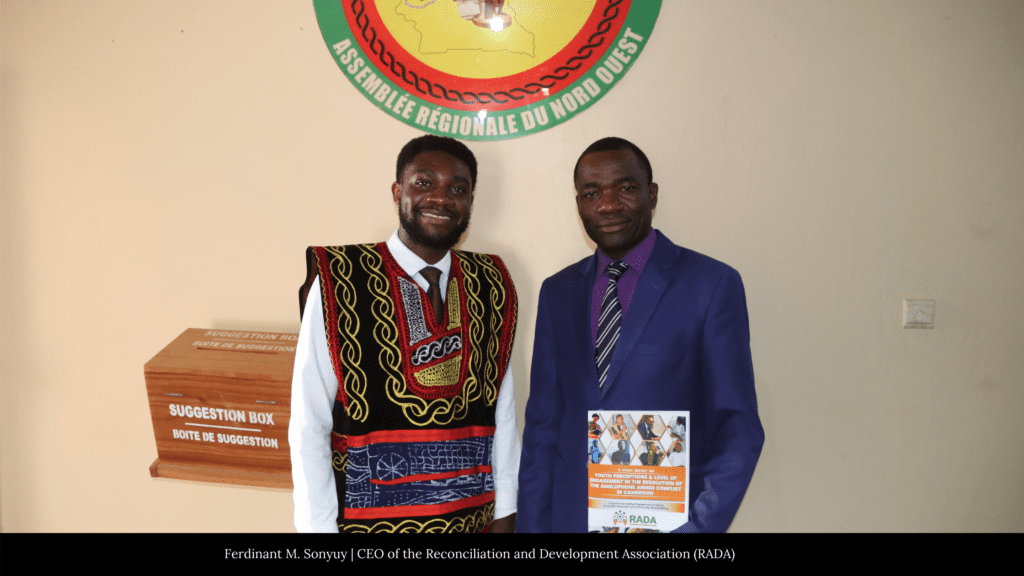
Ferdinant M. Sonyuy: A Journey of Hope, Resilience, and Change
Digital Version In the ever-complex world of community development, few stories are as inspiring as that of Ferdinant M. Sonyuy, the CEO of the Reconciliation and Development Association (RADA). His journey is not just a narrative of professional growth but a deeply personal mission to create lasting change in Cameroon and beyond. With RADA, he has combined his life experiences, family values, and a profound sense of purpose to build an organization that touches countless lives. His story is a testament to what is possible when passion, vision, and determination align. Every journey of change begins with a single step, but it’s the passion behind it that paves the way for lasting impact. Roots in Nso and a Legacy of Service Ferdinant’s story begins in Nso, a major tribe in the Northwest Region of Cameroon. Growing up, he watched his parents embody the spirit of service. His mother, a nurse, dedicated herself to caring for the sick at the Banso Baptist Hospital, while his father, despite the challenge of ending formal schooling in his youth, became an English teacher and a Finance Clerk. His father’s true passion, however, was helping vulnerable children. He eventually founded an NGO and school that provided support for over 350 children facing challenges like HIV, disabilities, and poverty. “My father was one of my greatest inspirations,” Ferdinant shares, his voice filled with both pride and nostalgia. Though his father’s efforts were disrupted by the current armed conflict, the impact of those early lessons in resilience and compassion shaped Ferdinant’s perspective on life. His father’s passing from cancer in 2021 was a turning point—an emotional yet motivating reminder of the importance of carrying forward the legacy of making a difference. It was from this foundation that Ferdinant drew strength and envisioned a path forward through RADA, focusing on helping others and creating a lasting impact. A Leap of Faith: The Birth of RADA The seeds of RADA were planted in 2009, but it wasn’t until 2020 that Ferdinant took the leap, resigning from his position as a Program Manager for Non-Communicable Diseases (NCDs) with CBC Health Services to devote himself fully to RADA’s vision. The decision to leave a stable job wasn’t easy—especially given the uncertainties ahead—but Ferdinant’s resolve was unwavering. “It took courage to resign,” he admits. “For over nine months, I had no salary and survived from hand to mouth, but I knew that my vision was worth the sacrifice.” Ferdinant’s leadership at RADA focuses on a bold vision: creating opportunities for young people, fostering community development, and leading reconciliation efforts in a region deeply affected by conflict. “I knew I needed to do it myself,” he says of his decision to start RADA, “to lead by example and create the change I wanted to see.” His journey is a testament to the power of vision, even when resources are scarce. Taking a leap into the unknown is where the magic of change truly begins. Navigating Challenges in Reconciliation and Peacebuilding When it comes to peacebuilding in Africa, Ferdinant is realistic but hopeful. He believes that the root of many conflicts lies in misinformation, manipulation, and the lack of dialogue. “Reconciliation means settling differences, but you don’t do that without discussing or making informed decisions,” he explains. For him, a key challenge is educating communities about the dangers of misinformation and the importance of unity. “Africa has so many unnecessary conflicts that need peacebuilding and reconciliation,” he says, emphasizing the role of education in changing mindsets. Ferdinant is critical of the tendency to blame external forces for Africa’s challenges, advocating instead for self-reflection and internal growth. “The West has given us opportunities; it’s up to us to harness them,” he insists. RADA is working to address these challenges by advocating for youth engagement and encouraging African youths to address local issues rather than seeking solutions abroad. “We are of the generation that is critical of our leaders, but we need to be the change we aspire for Africa,” he adds. Leveraging Technology for Greater Impact RADA has embraced digital tools to enhance its outreach and efficiency, especially in conflict-affected regions. Ferdinant and his team use social media platforms like Facebook, X (formerly Twitter), LinkedIn, and Instagram to share updates and engage communities. Virtual tools like Zoom and Teams are also integral to their operations, facilitating remote meetings and collaborations. “Our website serves as a hub of information about our work, and we run an internal newsletter with plans to expand it externally,” he notes. While they are yet to fully integrate advanced technology into their programs, Ferdinant is optimistic about the potential of digital tools to amplify their reach. He sees technology as a valuable asset in increasing the visibility of RADA’s initiatives and fostering a more connected, informed community. Balancing Immediate Crises and Long-Term Vision For RADA, addressing immediate crises while keeping a focus on long-term goals is about leveraging expertise and collaboration. “We’ve built a strong network of leaders with credible records, which helps us design effective programs,” Ferdinant explains. During crises, this network becomes a crucial asset, offering insights and support that enable RADA to remain resilient. Ferdinant believes that the strength of RADA’s vision lies in making it everyone’s vision. “When the vision belongs to all, every small effort contributes to the bigger picture,” he says. This collective ownership has been instrumental in ensuring that RADA’s programs are sustainable and impactful, aligning with the broader goals of community well-being, national development and in response to the SDGs. Building Strategic Partnerships for Greater Impact RADA’s success is also tied to its ability to forge meaningful partnerships that align with its mission and vision. The organization’s health department, for example, has partnered with the Cameroon NCD Alliance and the Africa NCDs Network to combat chronic diseases both in Cameroon and in the continent. Additionally, with support from partners like Resolve to Save Lives, and the Global Health Advocacy Incubator, RADA has led campaigns to improve nutrition and reduce the risk of