Top Business Leaders | Inspirational Leadership for Success

Apple Rethinks Global Strategy by Expanding iPhone Assembly in Brazil

Apple is taking a bold new step in its global operations by expanding iPhone assembly in Brazil, marking a strategic shift in how the tech giant manages its manufacturing footprint. This move comes amid increasing geopolitical tensions, particularly involving trade between the United States and China, and growing tariffs on imports from Asia. The decision to boost production in Brazil isn’t simply about escaping taxes. It reflects Apple’s broader strategy to diversify its supply chain, reduce dependency on a single region, and adapt to changing economic landscapes. Brazil, already home to some of Apple’s production through local partners, is now becoming a more important player in the company’s global manufacturing roadmap. According to reports, Apple is set to enhance its operations in São Paulo. The expansion not only helps Apple avoid potential supply chain disruptions but also supports local manufacturing—a key point for governments looking to encourage domestic production. Brazil’s leadership has been welcoming to international companies willing to invest in jobs and technology, creating a mutually beneficial relationship. This isn’t Apple’s first step toward manufacturing diversification. The company has also invested heavily in India over the past few years, assembling multiple iPhone models there. With the addition of Brazil, Apple is essentially developing a triangle of production—Asia, South America, and soon perhaps parts of Africa—ensuring more resilience in its operations. As supply chain security becomes a top priority for tech giants, Apple’s Brazil expansion could set a precedent for other companies navigating the global trade environment. It’s a sign of how companies are adjusting their strategies not just for efficiency or cost—but for long-term stability.

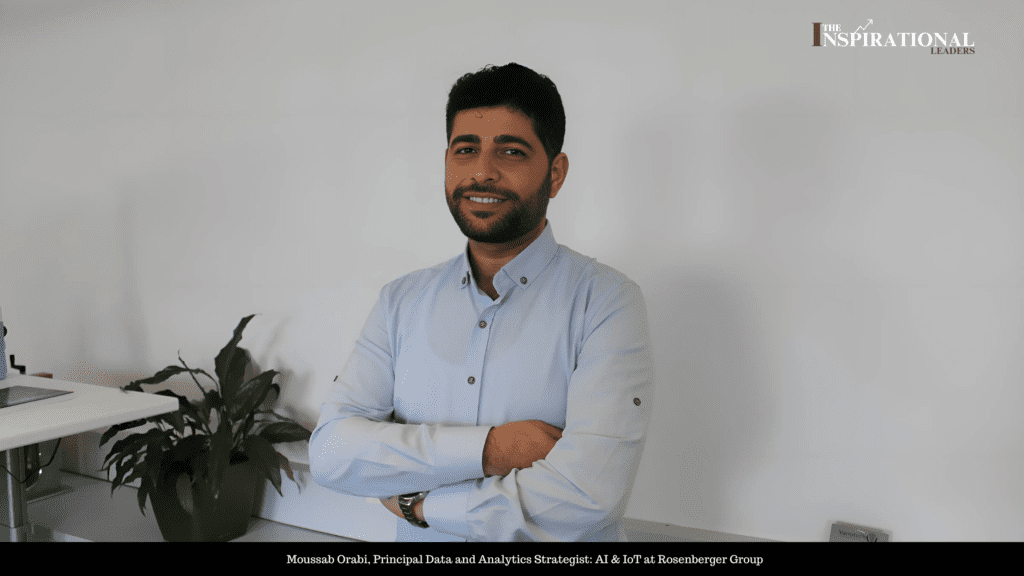
Moussab Orabi, Principal Data and Analytics Strategist: AI & IoT at Rosenberger Group

Future of Manufacturing: AI and Moussab Orabi’s Vision for Data-Driven Innovation

Digital Version Future of Manufacturing: AI and Moussab Orabi’s Vision for Data-Driven Innovation The manufacturing industry is undergoing a seismic transformation, driven by the rapid adoption of Artificial Intelligence (AI) and data-driven technologies. At the forefront of this evolution is Moussab Orabi, Principal Data and Analytics Strategist: AI & IoT at Rosenberger Group. With a deep passion for AI, Orabi has been instrumental in leading Rosenberger’s digital transformation, leveraging AI and IoT to enhance manufacturing efficiency, optimize decision-making, and drive innovation. A Journey Rooted in AI and Data Science Orabi’s fascination with patterns in nature, human behavior, and historical events led him to pursue a career in AI and data science. Transitioning from software engineering to making software smarter, he pursued a master’s in Big Data and Decision-Making Systems in 2015. Moving to Germany the same year, he joined Rosenberger as a Software Engineer, gradually shifting to a Data Scientist role. His commitment to AI culminated in a Ph.D. (2021–2024) specializing in process mining for anomaly detection. Since 2024, he has been leading Rosenberger’s AI and IoT strategy, ensuring the company remains at the cutting edge of manufacturing technology. At Rosenberger, we believe in ‘AI for All’—empowering every department with data-driven insights. AI and Data Analytics: Transforming Manufacturing AI and data analytics are set to revolutionize manufacturing, driving predictive maintenance, process optimization, and quality assurance. At Rosenberger, we see AI-powered automation, digital twins, and generative AI enhancing efficiency, minimizing downtime, and enabling real-time decision-making. Machine learning will refine supply chains with better forecasting and risk management, while AI-driven edge computing will improve speed and security. Sustainability will also benefit, with AI optimizing resource use and reducing carbon footprints. Rosenberger remains committed to leveraging these advancements to lead in manufacturing innovation. Optimizing Manufacturing with AI and Machine Learning Rosenberger’s Zero Defect Firewall strategy underscores the company’s commitment to quality, integrating AI and ML into process monitoring and quality inspection systems. Real-time anomaly detection using Transformer-based models and end-of-the-line inspection using YOLO-based deep learning ensures early defect identification. Predictive maintenance minimizes equipment failures, reducing downtime and operational costs. Furthermore, AI-driven statistical process control and Six Sigma methodologies streamline production, ensuring consistent quality. Rosenberger’s Generative AI-powered chatbot, Rosi, enhances data-driven decision-making across departments, further driving efficiency. The past mirrors the future if we make the right projections. Aligning AI with Rosenberger’s Core Values Ensuring that AI solutions align with Rosenberger’s core values—quality, efficiency, and sustainability—is paramount. A structured AI strategy integrates ethical AI principles, transparency, and stakeholder collaboration. AI governance frameworks maintain compliance and accountability, while continuous model refinement ensures alignment with business objectives. By embedding AI within its operations, Rosenberger continues to uphold its commitment to high-quality manufacturing. Data Security and AI-Driven Cybersecurity Data security and privacy are critical in today’s digital landscape. Rosenberger enforces a multi-layered data governance framework, adhering to GDPR, ISO/IEC 27001, and industry regulations. AI-powered monitoring tools identify and mitigate cybersecurity threats in real time, while federated learning minimizes data exposure risks. Powered by Microsoft Azure, Rosenberger’s modern data platform ensures enhanced security, scalability, and compliance. Overcoming AI Implementation Challenges Integrating AI into legacy manufacturing systems poses challenges, including infrastructure limitations, data quality issues, and organizational buy-in. Rosenberger addresses these by modernizing data pipelines in phases, deploying real-time data cleansing mechanisms, and engaging stakeholders through workshops and hands-on demonstrations. By fostering trust and illustrating AI’s impact, the company accelerates AI-driven transformation. AI is not just a tool; it’s a transformative force that aligns with our core values of quality and sustainability. Cultivating a Culture of AI-Driven Innovation Rosenberger embraces an “AI for All” philosophy, ensuring AI adoption is not confined to a single department. Key initiatives include AI workshops and hackathons, research partnerships with academic institutions, and Data & AI Centers of Excellence that foster knowledge-sharing and best practices. Continuous AI training and upskilling ensure that employees remain equipped to drive AI innovation. Success in AI depends on aligning data, technology, and people. Impactful AI Projects Driving Manufacturing Excellence Rosenberger has deployed over 17 AI-driven initiatives that significantly enhance efficiency and quality. Notable projects include: Deep Learning for Quality Inspection: YOLO-based defect detection models reduce manual inspection time and improve product quality. Anomaly Detection in Electroplating Processes: AI-powered real-time monitoring, leveraging Azure’s Anomaly Detector, minimizes defects. AI-Powered Process Mining: Machine learning models identify inefficiencies, streamlining workflows and boosting productivity. Collaborative Forecasting System: AI-driven demand planning optimizes supply chain efficiency and responsiveness. GenAI for Smart Product Information: Automating product data management improves accuracy and customer experience. The future of manufacturing lies in digital twins, generative AI, and the industrial metaverse. Advice for Manufacturers Embarking on AI Transformation For manufacturers beginning their AI journey, success hinges on three pillars: Data, Technology, and People. AI implementation should align with business needs, ensuring high-quality data governance. Organizations should adopt a phased approach—starting small, proving value, and scaling AI initiatives gradually. Building a data-driven culture through cross-functional collaboration and training ensures widespread AI adoption. Leveraging scalable cloud infrastructure and prioritizing ethical AI practices are also critical. Emerging AI Trends Shaping the Future of Manufacturing The future of manufacturing will be defined by AI-driven automation, digital twins, generative AI, and the industrial metaverse. Key technological advancements include: Digital Twins & AI Simulation: Enhancing predictive maintenance and operational efficiency. Industrial Metaverse & IoT Connectivity: Creating smart, interconnected factory environments. Combinatorial AI & AI Agents: Advancing autonomous decision-making and process automation. To stay ahead, Rosenberger is investing in scalable data infrastructure, expanding AI-driven automation, and developing AI-ready talent through continuous training and innovation initiatives. With AI, we’re not just making better products; we’re building a better future. Conclusion As manufacturing enters an AI-powered era, leaders like Moussab Orabi and Rosenberger Group are at the helm of this transformation. By leveraging AI and data analytics, they are setting new benchmarks in efficiency, quality, and innovation, ensuring that the future of manufacturing is both intelligent and sustainable.

Jean-Christophe Lambert, Co-founder & CEO - Ascendance

Jean-Christophe Lambert: Pioneering Sustainable Aviation with Ascendance

Digital Version Jean-Christophe Lambert: Pioneering Sustainable Aviation with Ascendance In the dynamic realm of aerospace and aviation, few names shine as brightly as Jean-Christophe Lambert. As the visionary co-founder and CEO of Ascendance, Lambert has dedicated his life to exploring innovative possibilities within the aviation sector since his youth. After his involvement with the Airbus E-Fan project, he established Ascendance, demonstrating his unwavering commitment to transforming civil aviation. In this exclusive interview, Mr. Lambert discusses his insights on the future of aviation, the challenges of innovation, and how Ascendance is paving the way for a greener and more efficient future in air travel. The aviation industry is at a crossroads. We have a responsibility to reduce our carbon footprint while ensuring that air travel remains accessible and economical. The Genesis of Ascendance: A Vision for Sustainable Aviation   For Jean-Christophe Lambert, the drive to co-found Ascendance came from a deep love for aviation and an urgent need to tackle the industry’s environmental challenges. “The aviation industry is at a crossroads,” Lambert states. “We have a duty to lower our carbon footprint while keeping air travel affordable and within reach.”   Lambert’s involvement with Airbus’ E-Fan project, which centered on electric propulsion, marked a significant turning point in his career. While the project demonstrated the possibilities of electric aviation, it also revealed the drawbacks of fully electric solutions, especially regarding range, weight, and efficiency. This insight prompted Lambert to investigate hybrid-electric propulsion as a more feasible and immediate approach to decarbonizing air transport.   Ascendance emerged from this vision. The company’s leading technologies, the STERNA hybrid-electric propulsion system and the ATEA aircraft, aim to cut fuel consumption and emissions by up to 50% and 80%, respectively. “Our aim is not just to create new technologies,” Lambert stresses, “but to transform how people and goods are transported, making air travel more sustainable and accessible.” The Future of Aviation: Key Trends and Innovations The aviation industry is experiencing a major transformation, fueled by technological progress and a pressing need for sustainability. Lambert highlights several important trends that are set to reshape the industry in the near future. “Sustainable Aviation Fuels (SAF) are on the rise,” he points out, “with EU and UK airports mandated to achieve a 2% SAF blend by 2025. This is a vital step in reducing the industry’s carbon emissions.”  Hybrid-electric propulsion technology, as demonstrated by Ascendance’s STERNA system, is another significant development. “Our technology speeds up the use of SAF while overcoming the range limitations of battery-only options,” Lambert states. The emergence of Vertical Takeoff and Landing (VTOL) aircraft, like Ascendance’s ATEA, is poised to transform regional air travel, creating new opportunities for passenger transport, medical services, and cargo delivery.  Artificial Intelligence (AI) and automation are also anticipated to significantly enhance efficiency in various areas of aviation operations, from flight planning to predictive maintenance. “Advancements in sustainable aircraft design, including aerodynamics, materials, and propulsion systems, will lead to more fuel-efficient planes,” Lambert adds. “These trends are guiding the aviation sector toward a more sustainable, efficient, and accessible future.” Our goal is not just to develop new technologies, but to reshape how people and goods move, making air travel more sustainable and accessible. Overcoming Challenges: The Path to Innovation   Developing groundbreaking aviation technologies comes with its share of obstacles. Lambert openly shares the difficulties Ascendance has encountered and how the company has navigated them. “The aviation industry is highly regulated, which means new technologies must go through extensive certification processes,” he explains. “To tackle this, we’ve made it a priority to engage with regulatory bodies early and frequently, ensuring our designs meet or exceed safety standards from the very beginning.”   Another major challenge has been the technical complexity involved. “Integrating hybrid-electric systems into aircraft is quite a challenge,” Lambert acknowledges. “We’ve tackled this by bringing together a team of seasoned aerospace engineers and nurturing a culture of innovation.” Infrastructure limitations, especially the scarcity of charging facilities at airports, have also created hurdles. Nevertheless, Ascendance’s hybrid approach with STERNA provides greater flexibility, allowing operations even at locations without charging infrastructure.   Transitioning from prototypes to large-scale manufacturing has presented its own set of challenges. “We’ve addressed this by collaborating with industry leaders like Capgemini and Daher to tap into their expertise in industrialization and scaling operations,” Lambert notes. “Convincing both the industry and the public of the feasibility of new aviation technologies can be tough. We’ve concentrated on showcasing the real benefits of our technology through thorough testing and clear communication of our advancements.” By 2030, we envision a future where hybrid-electric aircraft are commonplace, transforming regional air mobility and significantly reducing the industry’s environmental impact. Differentiating Ascendance in a Competitive Market In the expanding market of hybrid and electric aircraft, Ascendance distinguishes itself through several key factors. “Unlike many companies that concentrate solely on aircraft or propulsion systems, we develop both,” Lambert explains. “Our STERNA propulsion technology and ATEA aircraft are designed to work together seamlessly, enhancing performance and efficiency.” The modular and scalable design of the STERNA system allows for application across various aircraft sizes and types, positioning Ascendance to make an impact in multiple segments of the aviation market. “While many competitors are focused on long-term, fully electric solutions, our hybrid approach provides significant environmental benefits that can be realized quickly,” Lambert states. “This enables us to make an immediate impact.” Ascendance’s comprehensive sustainability strategy goes beyond merely reducing emissions. “We tackle fuel consumption, noise pollution, and aim to decrease operating costs,” Lambert points out. “Our strong industry partnerships, including those with Capgemini, Daher, and Delair, bolster our ability to scale and industrialize our innovations effectively.” Driving Widespread Adoption of Hybrid-Electric Aircraft Several key factors are set to drive the widespread adoption of hybrid-electric aircraft, and Ascendance is strategically positioned to take advantage of these trends. Lambert explains, “Environmental regulations are becoming increasingly stringent, pushing the industry towards cleaner technologies. Our STERNA technology, which can significantly reduce emissions and fuel consumption, is well-suited to meet these evolving requirements.”  Economic viability will

Groundbreaking Sustainable Cities: Sepideh Azizi’s Plan for Urban Resilience and Fairness

Digital Version Groundbreaking Sustainable Cities: Sepideh Azizi's Plan for Urban Resilience and Fairness Urban planning has begun to change as cities around the world face two big problems: fast city growth and climate change. Sepideh Azizi, who studies and teaches at the University of Illinois Urbana-Champaign, leads this new direction. Azizi’s work aims to create sustainable cities. She connects research based on facts with real-life uses. This offers new ways to solve some of today’s biggest environmental and social issues. Sustainability isn’t just a concept—it’s a responsibility. Cities must be built for both resilience and fairness, ensuring no community is left behind. A Journey Grounded in Inquisitiveness and Toughness Sepideh Azizi’s path to sustainable urban planning started with keen interest in city operations and a wish to tackle the environmental issues she saw while growing up in Iran. “I witnessed how extreme heat, water scarcity, and other climate-related problems had an impact on communities,” she remembers. “This early exposure pushed me to study urban planning with a heavy emphasis on sustainability.” Her academic and work experience has led her through various settings, from examining urban heat islands in major U.S. cities to evaluating flood risks and farm changes in Iran. Now, her studies at the University of Illinois Urbana-Champaign center on climate toughness clean energy shifts, and disaster prevention. “I’m drawn to how data, policy, and social fairness connect,” she says. “This is where I find the most meaning and satisfaction in my work.” The Developments of Sustainability in Urban Planning No longer an ideal, but increasingly a necessity, Azizi adds that cities must heed the integration of sustainable planning to tackle climate change, improve environmental justice and bolster quality of life, all the while finding that actualisation of these objectives is fraught with hurdles.  “One of the major obstacles is that sustainability needs to be equitable,” she says. “More often than not, green things-carrying renewable energy projects or even urban greening-benefit wealthier areas and leave lower income communities behind.” She adds that strong, political and financial barriers generally slow down the adoption of those sustainable policy initiatives. “Many cities have developed these robust, ambitious climate goals, but then don’t have the funding or political will to implement them at scale,” she adds. But to actually deal with these kinds of challenges, Azizi has really taken it up a notch and made use of very cutting-edge technologies like Geographic Information Systems (GIS), remote sensing, and deep learning models. “These tools allow us to provide cities with data-driven insights that make sustainability planning more targeted and effective,” she says. Fair and just sustainability efforts will address climate change and make life more livable as well. Innovative Strategies for the Environmentally Friendly Cities Azizi keeps a very optimistic outlook on the future of sustainable cities by harnessing new technologies and nature-based solutions. “Artificial intelligence and machine learning are transformative forces,” she emphasizes. “They allow us to predict environmental hazards and optimize energy use and urban design all based on real-time data.”  She also indicates how GIS and remote sensing play a critical role in tracking changes in land use, pollution, and green cover. More than technology in urban sustainability, Azizi describes green roofs, pocket parks, and urban farms as nature-based solutions. “These methods not only make cities more resilient but also enhance the life of their inhabitants,” she adds.  Another area close to her heart is the transition to sustainable energy. Azizi is examining solar energy policy in Chicago, focusing on the equity and accessibility of renewable energy programs. “It’s important that the transition to clean energy benefits low-income and marginalized communities,” she states. Integrating Sustainability in Teaching and Research As a graduate research and teaching assistant Azizi applies the concepts of sustainability in her research and her teaching pursuits. The topics covered by her research include: from the study of urban heat island effects in a few U.S. cities such as Chicago, San Francisco and Phoenix, through research on drought severity and management of water resources in Iran. Currently, she heads a campus-wide survey on transportation at the University of Illinois to assess preference for modes of travel alongside issues of spatial justice. “Indeed, this research is critical in understanding how we can make mobility more sustainable and equitable,” she adds. Azizi also insists on data-driven and critical-thinking techniques in her teaching. “In my GIS for Planners course, I introduce students to spatial analysis techniques and their applications in urban sustainability mapping,” she says. “These are the skills needed to ensure the next generation of urban planners is prepared to confront looming challenges in sustainability.”  Geared to Students for Careers in Sustainable Urban Planning  She asserts that to be successful, one needs to blend technicalities and the art of creative problem-solving. With this, she says, “I stress GIS and spatial analysis, data-driven decision making and critical thinking” in my classroom. In teaching the students to understand how to evaluate real urban issues and demonstrate what they have learned in developing sustainable solutions, she engages them in real hands-on class projects that have them do census data extraction, demographic mapping, and site design to allow for their learnings to be evaluated in practice.  She familiarized students with the major urban planning paradigms today such as Smart Growth and Transit-Oriented Development (TOD). “These frameworks spawn holistic avenues for sustainability,” she explains. “They prepare students to understand how to make cities not only environmentally friendly, but also socially and economically vibrant.” Collaboration Between Academia and Industry She stresses that academia and industry must work together toward the larger goal of sustainable urban development. “Universities provide data-driven insights, policy analysis, and emerging technologies, and the industry provides resources, infrastructure, and scalability,” she says.  An interesting aspect of collaborations is living labs, pilot projects, and public-private partnerships. “These initiatives allow us to test and refine sustainable urban solutions in real-world settings,” she says. Internships, collaborative research initiatives, and advisory boards also allow students and faculty to directly grapple with industry challenges, fostering innovation and workforce

Scroll to Top