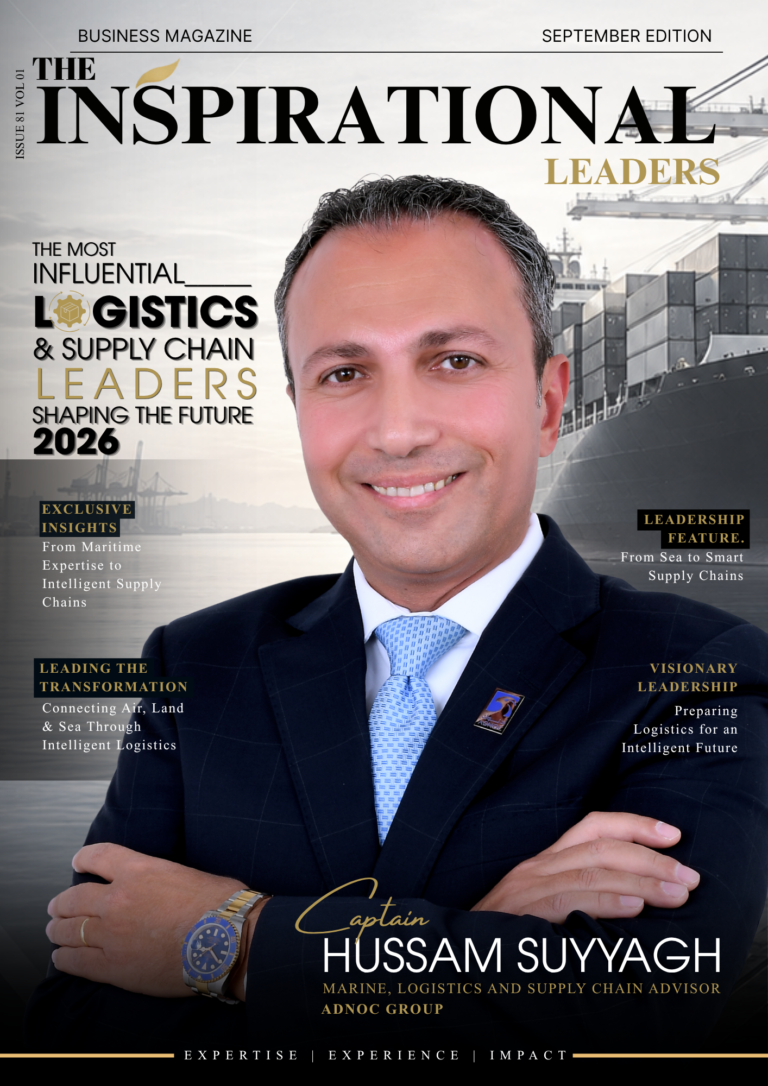
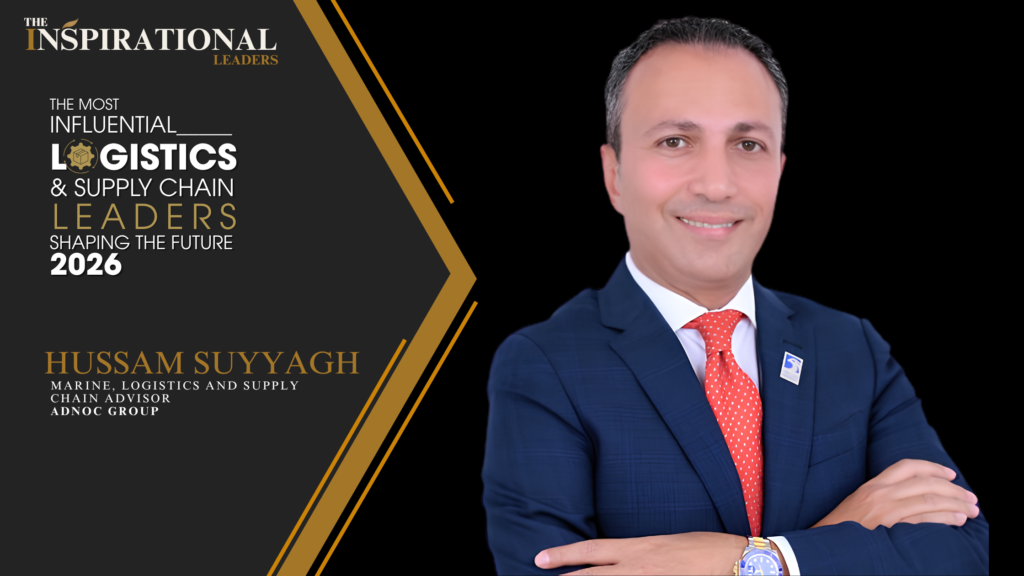
From Sea to Intelligent Ecosystems: Captain Hussam Suyyagh Shaping the Future of Global Logistics
Digital View Captain Hussam Suyyagh | Global Marine, Logistics and Supply Chain Thought Leader Before logistics entered the age of Artificial Intelligence, autonomous systems, digital twins, and connected ecosystems, Captain Hussam Suyyagh working as Marine, Logistics and Supply Chain Advisor | ADNOC Group mastered its most enduring lessons at sea. The maritime environment revealed a fundamental truth that would ultimately shape his professional journey: global progress depends on the capacity to connect people, assets, technology, and markets efficiently across borders. What may appear simply as the movement of goods is, in reality, a complex network of decisions, relationships, infrastructure, and capabilities working in concert. That insight became the foundation of a distinguished career spanning more than three decades across marine operations, energy logistics, aviation, digital ecosystems, and advanced technology. Throughout this journey, Suyyagh has done more than witness logistics evolve. He has helped shape initiatives that anticipate where the industry is heading, from digitally enabled logistics operations and AI powered platforms to autonomous marine technologies, drone command and control systems, and smart warehouse initiatives. His career embodies the wider transformation reshaping the global industry. Logistics is moving beyond transportation and operational efficiency toward intelligent and interconnected ecosystems capable of predicting disruption, optimizing decisions, and adapting in real time. For Captain Hussam, however, technology is only one dimension of that transformation. The defining challenge is cultivating the leadership, resilience, collaboration, and strategic vision required to turn emerging capabilities into sustainable operational value. A Maritime Foundation That Inspired a Global Vision Captain Hussam’s leadership philosophy was forged through the realities of maritime operations, where complexity and uncertainty are constant realities rather than occasional disruptions. Life at sea taught him that successful operations depend on awareness, discipline, sound judgment, and the ability to respond when circumstances change. More significantly, it revealed the broader economic significance of logistics. Every vessel, warehouse, transportation network, and operational decision is part of a much larger chain that enables industries and communities to function. That perspective inspired him to envision logistics far beyond transportation alone. Over more than three decades, his influence expanded across marine operations, energy logistics, aviation, and digital ecosystems. Each domain deepened his understanding of how physical operations and digital technologies can converge to create greater efficiency, resilience, and opportunity. Several pioneering milestones define this journey. He has contributed to establishing a digitally enabled Logistics Operations Center for a leading global energy enterprise, leading AI powered logistics platforms, pioneering autonomous marine technologies, launching an AI Drone Command and Control Center, and advancing autonomous smart warehouse initiatives. His professional influence also extends beyond individual organizations through leadership, governance, and participation in industry initiatives, including MARACAD, the Smart and Autonomous Systems Council, the Center of Excellence for Smarter Logistics, the Autonomous Mobility Council, international conferences, advisory boards, and innovation forums. Together, these experiences have shaped a leadership philosophy rooted in anticipation. For Captain Hussam, leadership is not simply about sustaining today’s operational performance. It is about building tomorrow’s capabilities before the market recognizes that they are necessary. When Supply Chains Become Strategic Command Centers Traditional supply chains were designed primarily around efficiency. Organizations sought to move goods faster, reduce costs, optimize inventory, and maintain dependable transportation. Today’s supply chain carries a far broader strategic mandate. Global markets are increasingly interconnected, while geopolitical developments, climate considerations, cybersecurity risks, customer expectations, and unexpected disruptions create a continuously changing operating environment. Efficiency remains important, but it can no longer stand alone. Captain Hussam envisions next-generation supply chains operating as intelligent ecosystems, not isolated operational functions. Transportation, warehousing, data platforms, digital infrastructure, strategic partnerships, and predictive intelligence will increasingly operate as interconnected components of one network. This convergence will enable organizations to achieve real time visibility across their supply chains and respond to emerging risks before they become major operational disruptions. This evolution also elevates the strategic importance of supply chain management. Rather than positioning logistics merely as a cost center, leaders can activate it as a value creation engine capable of strengthening competitive advantage, supporting innovation, and contributing to economic resilience. In this future model, the supply chain becomes more than a pathway between supplier and customer. It becomes an enterprise-wide strategic command capability. Beyond Technology Silos: The Connected Logistics Era The next logistics revolution will not be driven by one technology operating in isolation. Captain Hussam champions the convergence of Artificial Intelligence, autonomous systems, digital twins, advanced analytics, and connected operational ecosystems. Artificial Intelligence can enable predictive planning, dynamic decision making, and real time optimization. Autonomous technologies can bring intelligence into physical operations through drones, autonomous vessels, and robotic logistics systems. Digital twins can empower organizations to model supply chain networks, test scenarios, simulate disruptions, and assess possible decisions before implementing them. The influence of these technologies multiplies when they are purposefully connected. An autonomous vessel, intelligent warehouse, predictive analytics platform, and drone system can each generate value independently. When integrated into a common operational ecosystem, however, they can exchange intelligence and orchestrate a much more responsive network. Captain Hussam’s experience across smarter logistics and autonomous mobility initiatives has strengthened this conviction. The future will favor organizations capable of uniting their physical operations with digital intelligence. The objective is never technology for its own sake. It is the ability to use technology to make operations more predictive, responsive, scalable, and resilient. Leadership Lessons Forged Under Pressure The sea also forged another defining dimension of Captain Hussam’s leadership: decision making under uncertainty. Marine operations require leaders to remain alert to changing conditions and make informed decisions even when circumstances are evolving. Those lessons remain equally relevant throughout his career, including during large transformation programs where uncertainty can be just as consequential as it is in physical operations. Three enduring principles guide his approach. The first is situational awareness. Leaders must see conditions clearly and distinguish facts from assumptions. The second is decisiveness balanced with adaptability. Decisions cannot always await perfect information, but leaders must remain prepared to adjust when new evidence emerges. The third is trust reinforced by accountability.