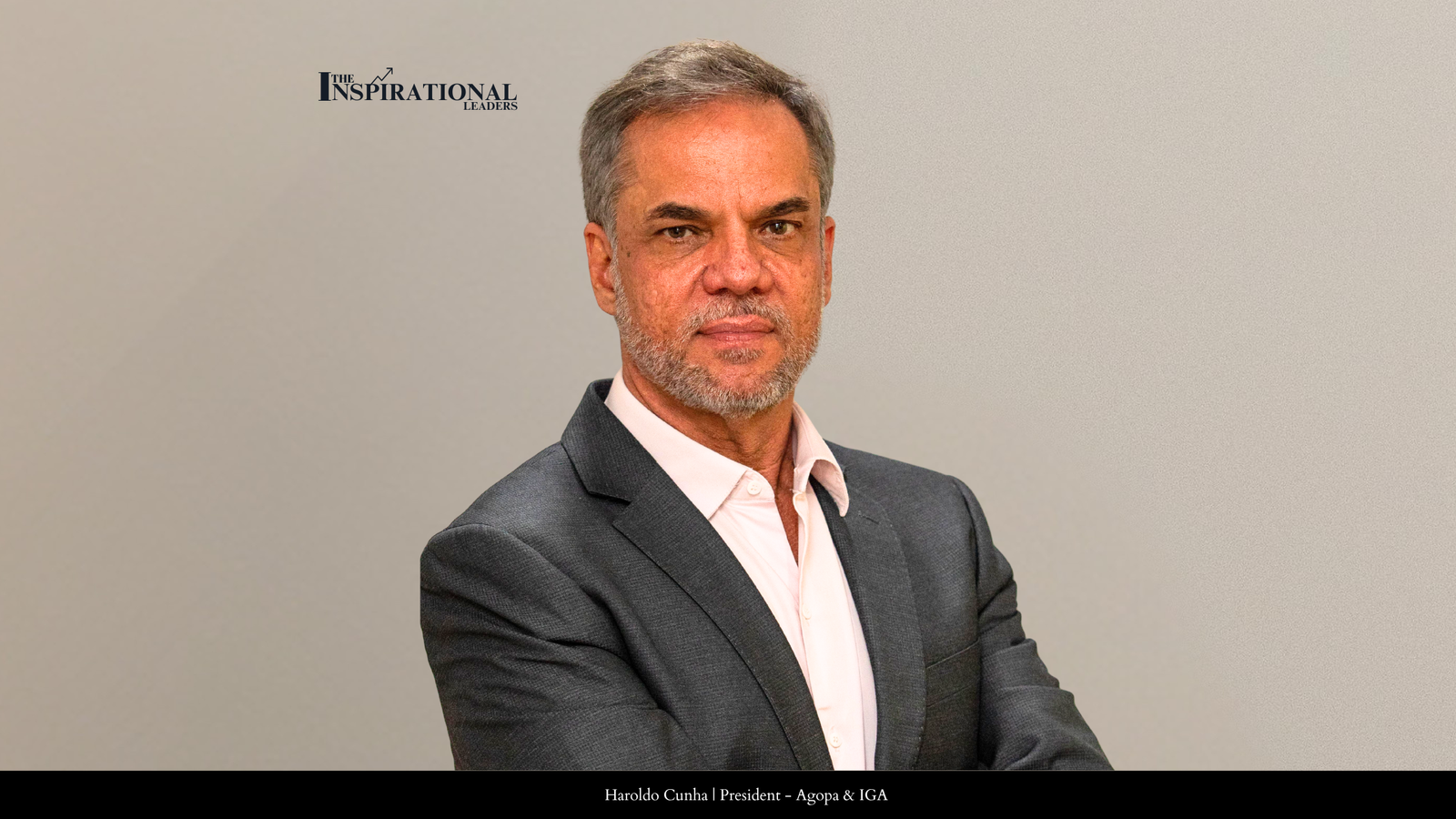
Growing More with Less: How Haroldo Cunha Is Advancing the Future of Sustainable Agriculture
Digital Version Agriculture has always been an industry defined by its ability to adapt. From the earliest farming practices to today’s highly sophisticated production systems, every generation has been challenged to produce more while working within the limits of available resources. Yet few periods have demanded as much balance as the present one. Farmers are expected to increase productivity, strengthen food security, meet sustainability expectations, preserve natural resources, and respond to rapidly changing market demands all at the same time. For Haroldo Cunha, President of AGOPA (Goiás Cotton Producers Association) and IGA (Goiás Institute of Agriculture), these challenges are not new. They have shaped much of his professional journey and continue to influence the work he leads today. As an agronomist, Cunha has spent decades following the evolution of agricultural technologies, production systems, and sustainability practices. Throughout that journey, he has witnessed agriculture transform from an industry focused primarily on output into one that increasingly values efficiency, environmental responsibility, and long-term resilience. His leadership has been closely connected to the development of Brazil’s cotton sector, a segment that has become recognized internationally not only for productivity and quality but also for its commitment to responsible production. Through AGOPA and IGA, Cunha has helped drive initiatives that connect research, innovation, sustainability, and practical farming solutions, ensuring that producers are equipped to meet both current demands and future challenges. What distinguishes his approach is a clear understanding that sustainable agriculture is not achieved through a single technology or isolated initiative. Instead, it requires the continuous integration of knowledge, innovation, collaboration, and responsible resource management. It is a philosophy that has guided his work for years and one that continues to shape the future of cotton production in Goiás and beyond. A Career Built on Continuous Improvement Since the beginning of his professional career, Haroldo Cunha has maintained a strong interest in technical innovation within agriculture. As an agronomist working directly with production systems, he consistently sought opportunities to improve farming practices and increase efficiency on the farm. That commitment became even stronger when he became involved with AGOPA and other institutions connected to the cotton sector. Through these experiences, he gained exposure not only to Brazilian cotton production but also to the broader global cotton industry. The deeper his involvement became, the clearer it was that productivity alone would not define the future of agriculture. While improving yields and enhancing fiber quality remained important objectives, another factor was becoming increasingly impossible to ignore: sustainability. “As we learned more about cotton production around the world, it became clear that sustainability would play an increasingly important role,” Cunha explains. This realization extended beyond environmental considerations. He understood that sustainable production was essential not only for preserving natural resources but also for maintaining competitiveness in a market that was becoming more attentive to environmental, social, and governance practices. That understanding led him to play an active role in implementing sustainability programs across Goiás and Brazil. During his tenure leading ABRAPA, the Brazilian Cotton Producers Association, Cunha was directly involved in initiating the implementation of the Better Cotton Initiative in Brazil, helping establish a framework that would later become one of the industry’s most significant sustainability programs. For him, sustainability was never viewed as a trend or external requirement. It was a practical necessity for ensuring the long-term future of agricultural production. Why Productivity and Sustainability Must Move Together Agriculture today faces a challenge unlike any before. The global population continues to grow, increasing demand for food, fiber, and renewable raw materials. At the same time, the resources required to support this growth—particularly land and water—are finite. According to Cunha, this reality has fundamentally changed how agricultural success must be measured. “It is no longer enough to produce at any cost,” he says. Over time, producers have come to understand that productivity cannot be separated from environmental responsibility. Soil health, water conservation, biodiversity protection, and efficient resource use are no longer secondary considerations. They are central to the future of agriculture. The need to produce more per hectare remains critical. However, achieving higher productivity without preserving the resources that make production possible creates risks that eventually undermine the entire system. This balance between productivity and sustainability is one of the principles guiding the work carried out by AGOPA and IGA. Through research, education, and technical support, both organizations seek solutions that allow producers to improve performance while protecting the natural resources on which agriculture depends. For Cunha, the objective is straightforward. Agriculture must continue increasing production, but it must do so using technologies and management practices that ensure future generations can continue farming successfully. Turning Sustainability Into Measurable Action While sustainability is frequently discussed throughout the agricultural sector, Cunha believes its value ultimately depends on practical implementation. This belief has helped shape several important programs supported by AGOPA and IGA. Among the most significant are the ABR – Responsible Brazilian Cotton program and the Better Cotton program. Although coordinated nationally by ABRAPA, these initiatives are implemented at the state level through organizations such as AGOPA. The programs establish clear standards covering environmental stewardship, social responsibility, and governance practices. Producers participating in the programs receive guidance and support to meet these requirements, while independent international auditing organizations verify compliance. The objective extends far beyond certification. These programs help producers incorporate sustainability into everyday operations, ensuring that responsible practices become part of the production system itself. The result is a model that allows cotton producers to strengthen environmental performance while maintaining competitiveness in demanding global markets. For Goiás producers, these initiatives have become important tools for demonstrating that high productivity and responsible production can successfully coexist. Research as a Foundation for Sustainable Growth If AGOPA focuses on representing and supporting producers, IGA serves as an important engine for agricultural research and innovation. The institute conducts studies designed to improve production systems while strengthening environmental sustainability. One area of particular focus involves crop rotation systems that integrate cotton production with soybean and corn cultivation. These systems are further